V'26 Festival Information
ments is drawing to a close – and with great success.
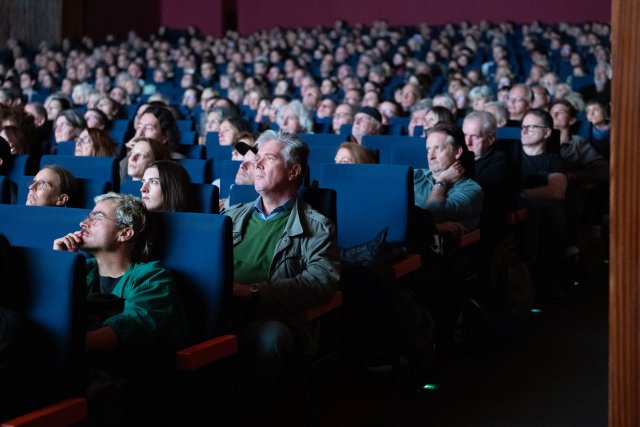
With 78,800 tickets sold, the high level of the previous year was even slightly exceeded. 112 of the 330 screenings open to the public – more than a third – were sold out. In addition, almost 3,500 visitors made their way to Funkhaus, this year’s festival headquarters, to take part in talks and discussions with filmmakers and experts. Or to enjoy music and dancing at five nights of concerts and parties.
“I am still overwhelmed by these two vibrant weeks of the festival,” says Viennale Director Eva Sangiorgi, looking back enthusiastically. “It is an extraordinary privilege to be part of it. The positive response from the audience once again shows how important the Viennale is to this city and how highly it is regarded internationally – by the many people who travel here from elsewhere. We were able to welcome extraordinary, incredibly generous guests who were swept up in the enthusiasm in the cinemas. I feel that this year we have grown even closer: with our loyal audience, with young and very young people, but also with the film industry. Together with our industry partners, we created numerous opportunities for filmmakers and professionals to come together, meet and exchange ideas.”
The first truly special moment of this edition came right at the beginning. Since the Viennale was founded in 1960, the festival had never opened with an experimental short film. This honour went to Austrian filmmaker Johann Lurf, who presented his 21-minute work, projected in 70mm, at the opening gala at the Gartenbaukino. The fact that another Austrian film, Tizza Covi and Rainer Frimmel’s THE LONELIEST MAN IN TOWN, is closing the festival, creates, as Eva Sangiorgi puts it, “a connection between all the things that matter to us about cinema: on the one hand, the fascinating power of an art form that emerged from technology and has continued to evolve alongside it. On the other, great auteur cinema that captures reality in an unmistakable way, with humanity and poetry. Two of the most precious discoveries of the international film year – and, at the same time, a wonderful occasion to celebrate an extraordinary year for Austrian cinema.”
BIG FILMS – SMALL PROGRAMS
Alongside the many “big” films in the main programme that were expected audience favourites, including PAPER TIGER, CLUB KID, THE DEBUT, WILD HORSE NINE, EVERYTIME, BUNKER, as well as the eagerly awaited and completely sold-out surprise film, which turned out to be Mike Leigh’s new film TENDER LOVING CARE, supposedly “small” programmes were also very well received by Viennese audiences. The retrospective of Jocelyne Saab’s work attracted an incredible response, much to the delight of Mathilde Rouxel, the Jocelyne Saab Foundation expert who was in attendance. The programme of Abbas Kiarostami’s early films for children also generated enormous interest, particularly among our international guests, and brought people of all ages into the cinemas – from filmmaker Ira Sachs to the young daughters of visiting directors. More generally, the Viennale’s programmes and initiatives for young people, such as the Viennale Debut Card and the Young Audience Screening, show that the festival is on the right track when it comes to inspiring a new generation of cinema-goers.