V'25 Awards
VIENNA FILM AWARD
The Vienna Film Award, an award endowed by the City of Vienna and presented as part of the Viennale, honors a recent Austrian feature film that was screened in the past year. The prize includes a cash award provided by the Cultural Department of the City of Vienna, along with financial support from The Harmonie Vienna hotel. In addition to the awaard for the best Austrian film, the Vienna Film Award also awards the Special Jury Award.
Jury: Michelle Cotton (Artistic Director of the Kunsthalle Wien), Felix Hoffmann (Artistic Director of FOTO ARSENAL WIEN, FOTO WIEN, and Co-Director of Vienna Digital Cultures), and Pia Reiser (film journalist at Radio FM4).
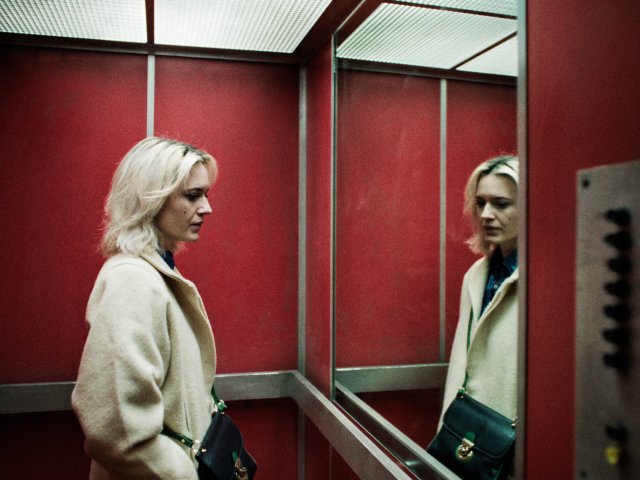
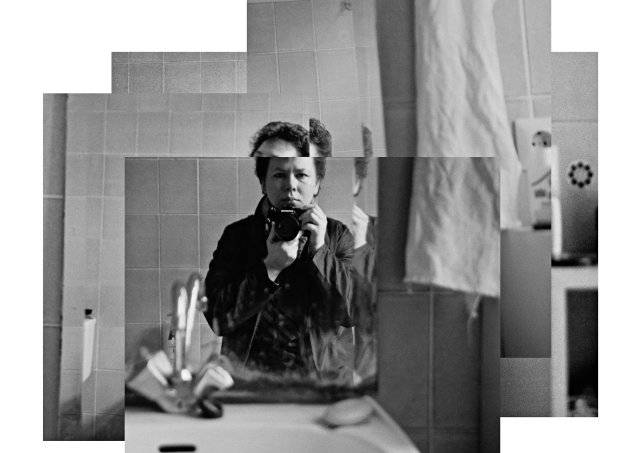
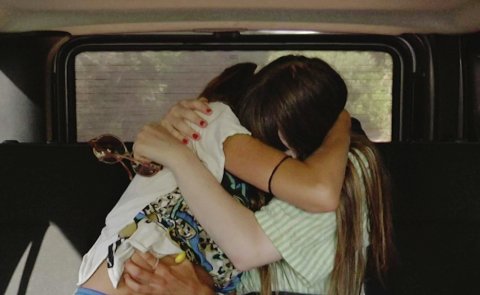
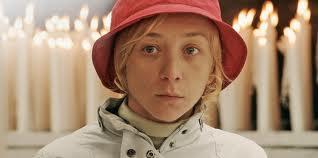
Best Austrian Film: PERLA
Dir: Alexandra Makarová
Austria, Slovakia, 2025
Jury Statement:
This is a perfectly crafted film that pulls you in from the very first second. PERLA is a film that you can not only watch and hear, but also smell — and it is a film that will surely touch you. It's rare to see a female artist in a feature film, and even rarer to see realistic, organic, funny and touching portrayals of relationships between mothers and children. But these two aspects are just the tip of the iceberg of the multifaceted PERLA. This drama, which slowly turns into a thriller about state repression, dares to take a complex approach when depicting the place Perla once fled from. It is a masterful film about identity and the many faces of the Cold War.
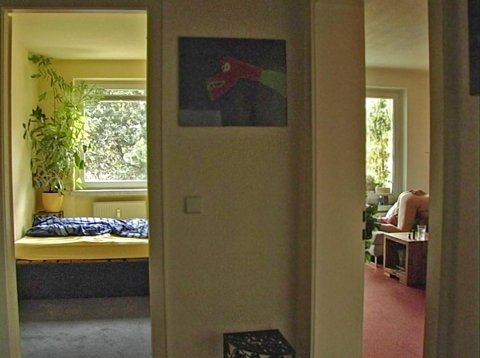
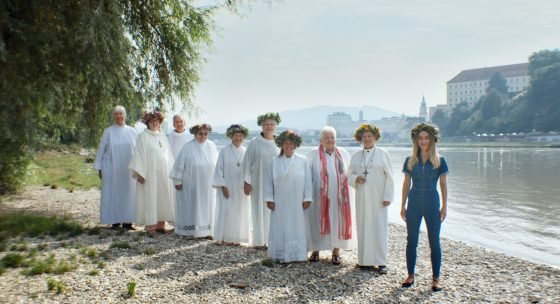
Special Jury Award: GIRLS & GODS
Dir: Arash T. Riahi, Verena Soltiz
Austria 2025
Jury Statement:
The approach seems simple enough, but when was the last time you discussed a topic with someone you knew would disagree with you? Inna Schewtschenko tackles the complex issue of the relationship between feminism and religion. GIRLS & GODS is engaging and eye-opening, and with its easy-going approach and pop appeal, it is not preaching to the converted (no pun intended), but inviting everyone to be part of it. GIRLS & GODS also defies a common convention among documentary filmmakers dealing with complex issues: leaving the audience feeling helpless and doomed. Schewtschenko’s activism is infectious, as is her fearlessness.
VIENNALE AWARD OF THE STANDARD READER'S JURY
DER STANDARD organizes the Standard Audience Jury Award again this year. The jury members select a film from the festival entries that does not yet have a distributor in Austria. If the winning film subsequently finds a distributor, DER STANDARD supports the film's release with free advertising space in the newspaper.
Jury: Urs Kamber, Brenda Özyılmaz, Mia Danica Drügh
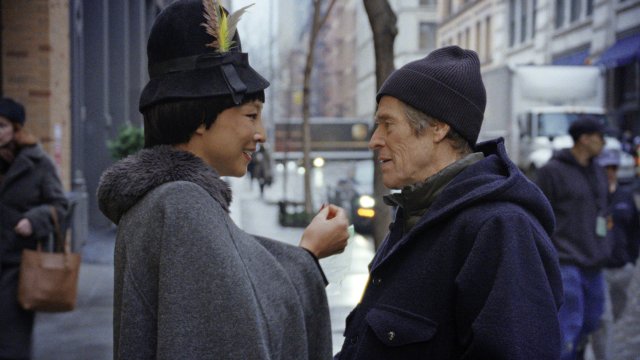
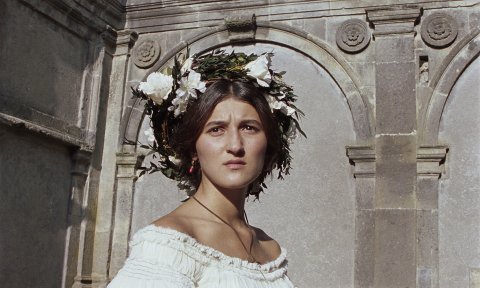
Dir: Kent Jones
USA 2025
Jury Statement:
In LATE FAME, a loose adaptation of a novella by Arthur Schnitzler set in New York, Kent Jones sets artistic nostalgia and the restless self-promotion of contemporary artists on a collision path. Between the post office and cocktail bars, influencers and searching for esthetic importance, former poet Ed Saxberger wrestles with his long-buried writing career while the Enthusiasm Society conjures up a romanticized bohemian lifestyle. Jones exposes the genius cult as posturing using sharp wit and reminds us that art only lives where vanity falls silent and doubts are allowed to speak.
Special Mention:
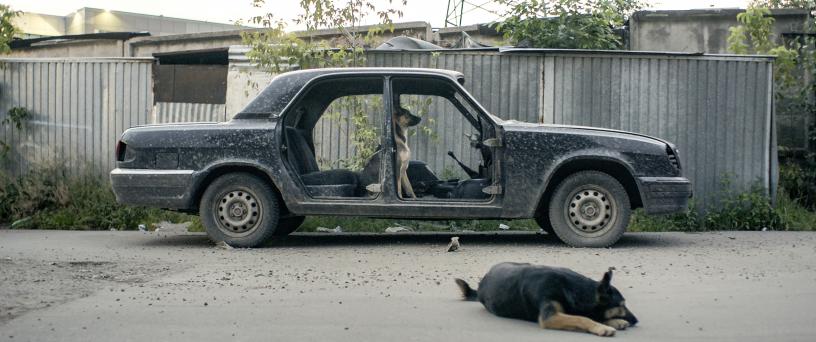
Hemme'nin öldüğü günlerden biri
Dir: Murat Fıratoğlu
Türkei 2024
FIPRESCI AWARD (INTERNATIONAL FILM CRITICS AWARD)
FIPRESCI, the International Federation of Film Critics, was founded in 1930. The association is dedicated to the cultivation of journalistic ethics and represents the professional interests of its members. The members of FIPRESCI come from all over the world and meet in small juries at numerous film festivals to award the award of the International Federation of Film Critics. Usually they choose - as at the Viennale - from a number of first and second features by young filmmakers.
Jury: Max Borg, Yun-Hua Chen, Roman Scheiber
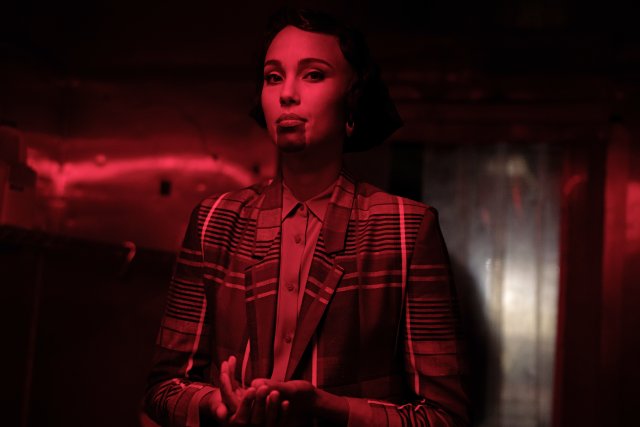
Dir: Kahlil Joseph
USA, Ghana 2025
Jury Statement:
BLKNWS: TERMS AND CONDITIONS is a playful visual album that unfolds like a techno score, it opens new perspectives on an important and urgent subject that has been neglected for far too long in history. It encourages us to learn, to unthink, to rethink. Creative and humorous in equal measure, it enriches the world of cinema in a personal and innovative way. There are surprises at every turn, as it blends fact and fiction with self-irony, a dignified self-awareness, and a profound intelligence about film as a medium and history as a construct. It is also an anti-cliché — a much-needed challenge to the hegemony of white Western narratives. We are left with a strong sense of curiosity about what the filmmaker will bring us next.
ERSTE BANK FILM AWARD – Vermehrt Schönes!
For the 15th time this year, the Erste Bank Filmpreis, initiated and endowed by Erste Bank, is being awarded in collaboration with the Viennale, the Deutsches Haus at NYU, and the Anthology Film Archives.
The winners are selected by an independent jury from among the Austrian film productions presented at the Viennale. The award enables the recipients to spend time in New York City, where their works are presented at the renowned Anthology Film Archives.
Jury: Silvia Bohrn (cultural manager), Nicolas Mahler (comic artist, artistic director of the School for Poetry), Boris Manner (philosopher, curator), Jed Rapfogel (curator, Anthology Film Archives)
The Erste Bank Filmpreis is awarded to two recipients:
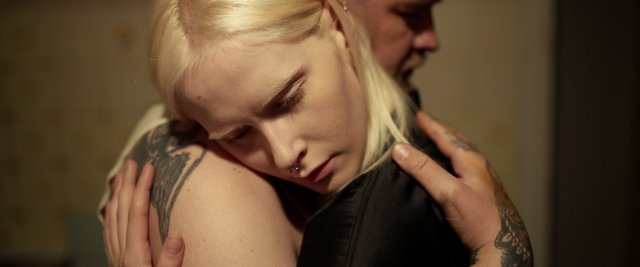
Dir: Elsa Kremser, Levin Peter
Austria, Germany2025
Jury Statement:
WHITE SNAIL is a film about two outsiders who could not be more different. Masha is studying to become a model so that she can flee from the dreary everyday life of Minsk; Misha works in a morgue. The two of them come together in an unusual way and a fragile romantic relationship develops between them, in which beauty and death – Eros and Thanatos – are closely intertwined. The world in which the two protagonists find themselves is cold, the feelings that the two develop for each other hostile.
In sensitively constructed encounters, which are brilliantly embodied by the actors, a love relationship grows that obscures the differences in background, age and the life plans of both characters. Stark contrasts and symbolic images take viewers on the couple’s fairytale journey. After nightly strolls through Minsk, the narrative culminates in an almost mystical forest expedition in which the contradictory feelings of the couple reach their climax.
The film manages to portray the characters’ emotions sensitively yet directly and never gets tedious. The protagonists, both making their debut as actors here, are convincing in their striking presence and authenticity. WHITE SNAIL is a film that is in keeping with the times – refreshing and honest. It depicts a hostile outside world and a fragile inner one that is both bleak and hopeful. The challenge is to survive and to find your own way.
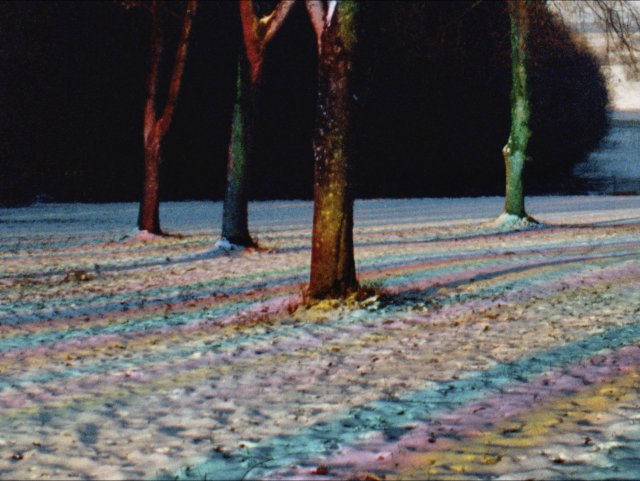
Dir: Viktoria Schmid
Austria 2025
Jury Statement:
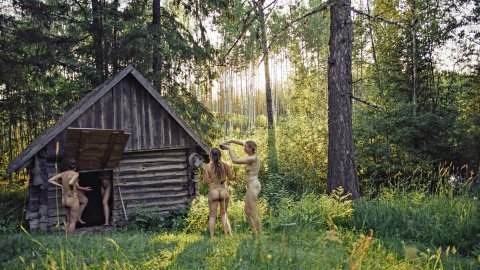
Viktoria Schmid’s ROJO ŽALIA BLAU is a landscape study – shot in the forests and seasides of Spain, Lithuania, and Lower Austria – that utilizes a simple but evocative technique: color separation photography (the basis of golden age Hollywood’s Technicolor process), by which the same scene is filmed in black-and-white using three different color filters, and then printed through the same filters, resulting in a full spectrum of visible color. But by shooting the same strip of film three successive times – rather than simultaneously, as in the manner of “true” Technicolor – Schmid is able to conjure an extraordinary, uncanny visual experience in which the colors drift in and out of sync depending on the degree of movement within the landscape or between the shots. The film’s technique is far more than a formal experiment: it becomes essentially a way of photographing time, with three different temporalities layered into a single (intoxicating) image and made visible only due to the movement produced by wind, wave, sun, and shadow. Achieving an astonishing fusion of color, motion, time, and philosophical inquiry, ROJO ŽALIA BLAU also holds a special resonance in an era in which it has become particularly important to explore the space that exists between “truth” and the image.