THE WHALE – BETWEEN ANATOMY AND IMAGINATION
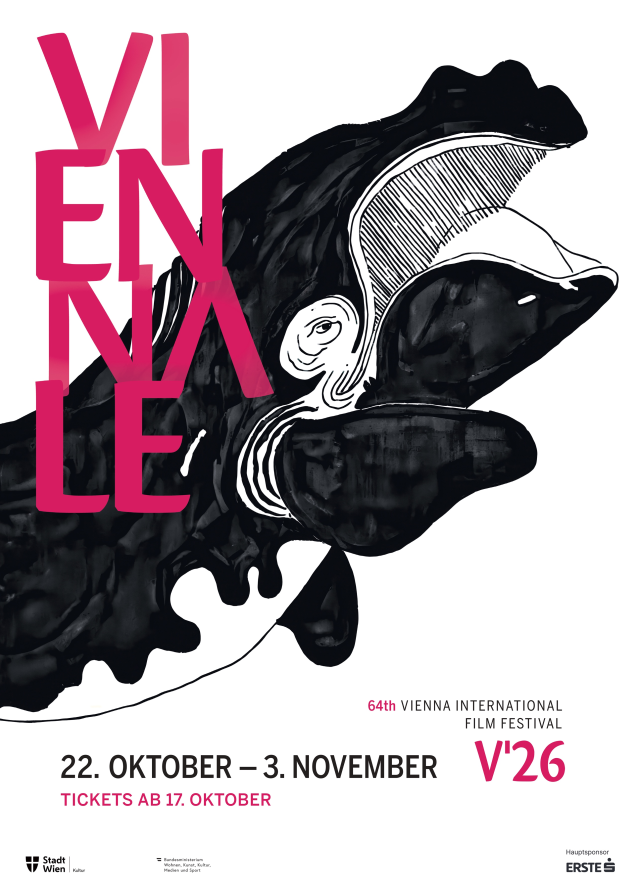
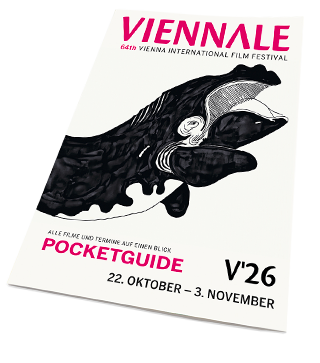
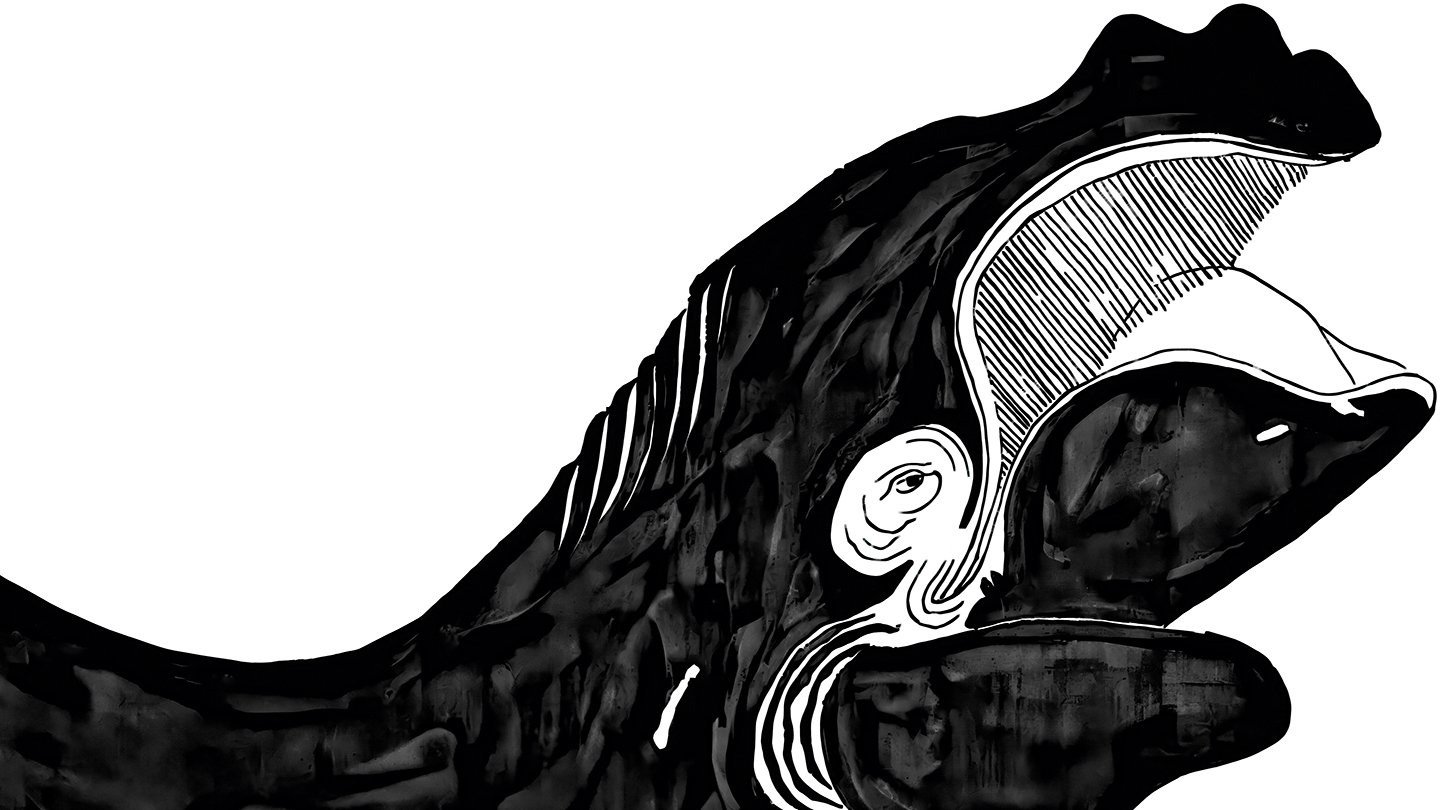
The image that serves as the foundation for reflection in our poster subject shows a North Pacific right whale and is taken from Geishi (“About Whales,” 1794) by Nanki Josuiken. This book presents as a scientific treatise about the fourteen species of whale known in Japan at the time. Yet, in reality, it is more art than science. The panels are composed like picture scrolls with calligraphed poems alongside the images. And in these pages, for the first time, the supposition is documented that the whale is a mammal, not a fish.
The Japanese natural depiction from the 18th century is imbued with ambivalence, as whale hunting was a widespread industry. The animal was caught, dismembered, measured, depicted – a seemingly documentary approach. And yet, the significance of the relationship with the whale always went beyond the purely practical. In narratives of the indigenous Ainu people, stranded whales were considered a gift from the gods; whale hunters carried out ceremonies so that the souls of the slaughtered animals were able to achieve Buddhist enlightenment. Even whale fetuses were given a solemn burial. Hunting and worshipping; dissection and reflection. The same culture that turned the animal into a commodity simultaneously treated it as an animate being – a hybrid iconography in which anatomic precision and fantastic invention coexist.

This ambivalence is also present in Western culture, where the sea creatures occupy an ambiguous position in biblical imagery. The great fish in the Book of Jonah, which swallows the eponymously named prophet, represents a trial that precedes rebirth. And there is Leviathan, a distinct monster of primordial chaos in the Book of Job and the Psalms. Later traditions merged the two into one single image: the whale – the guardian of a boundary between threat and transformation.
To conclude, it’s worth taking a look at the word itself. “Monster,” from the Latin “monstrum,” related to “monere” (to advise) and “monstrare” (to show). From an etymological perspective, the monster is not first and foremost a threat; it is, rather, a symbol that appears to convey a message. And perhaps it is precisely in the eye of the whale – small but in every depiction rendered with great care – that this function is fulfilled. Not as a threat, but as a gaze that meets our own. And which, in this mutual gaze, reveals a warning.