Festival Archive V'24

V'24 Festivalinfo

OCTOBER 17 TO 29 

The 62nd Viennale celebrated its official closing on October 29, 2025 with the gala screening of the film DAHOMEY by Mati Diop. After the extremely pleasing visitor numbers of the previous year and promising presales, we are delighted to report another very well-attended edition at the end of the festival and even an increase compared to 2023. In 13 festival days, 75,800 people attended film screenings at the Viennale, which corresponds to an occupancy rate of 76.3%.

“It was a wonderful edition, which of course had to deal with the political climate of uncertainty and concern and the conflict situations on so many fronts internationally,” says Viennale director Eva Sangiorgi about the past two festival weeks. “Audience participation has been exceptional, and the generosity of the guests has encouraged encounters, discussions and many reflections which, I am convinced, have given us all the feeling of being part of a community that does not want to adapt to violence, but opposes it through the many languages of cinema.” 
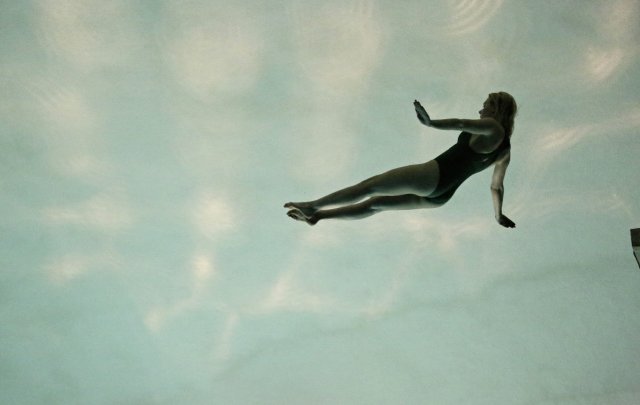
C'EST PAS MOI | © Viennale
V'24 Opening Film: C'EST PAS MOI (Leos Carax)

The Viennale 2024 once again offered plenty of highlights, including the opening gala with the shortest opening film ever shown at the Viennale, C’EST PAS MOI by Leos Carax, an unconventional, essayistic film that Eva Sangiorgi immediately declared a manifesto for this edition of the festival. Not entirely unexpectedly, the bigger hits of the festival year created a tingling atmosphere and sold-out auditoriums - also in the Gartenbaukino with its 736 seats, of which only a few remained empty at this Viennale: as seen with Jesse Eisenbergs A REAL PAIN, Sean Bakers ANORA, Aaron Schimbergs A DIFFERENT MAN and EMILIA PÉREZ by Jacques Audiard, to name but a few. A particularly great experience was Brady Corbet's THE BRUTALIST, which was played from a 70mm print delivered fresh from the factory. Andreas Dresen's impressive film IN LIEBE, EURE HILDE triggered unusually strong feedback - accompanied by a performance by the extraordinary actress Liv Lisa Fries.
GBK
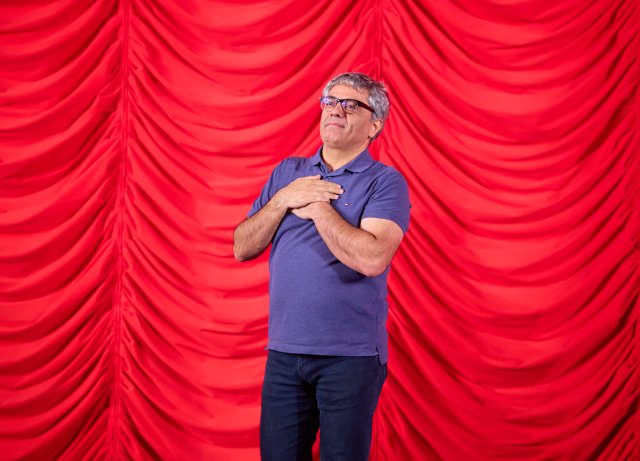
Mohammad Rasoulof, Gartenbaukino

Director Mohammad Rasoulof, who only fled Iran this year, gave audiences a very special cinema experience with his visit to Vienna and the moving discussions after the screenings of his film DANEH ANJEER MOGHADAS (THE SEED OF THE SACRED FIG). Joshua Oppenheimer once again inspired the audience with his post - apocalyptic musical THE END and his brilliant thoughts on filmmaking during his master class at the Zentralino.

There was a particularly big buzz around Austrian films at this Viennale, starting with Kurdwin Ayubs film MOND, which has already won numerous awards elsewhere, Alexander Horwath's impressive essay film HENRY FONDA FOR PRESIDENT, Mo Harawe's THE VILLAGE NEXT TO PARADISE and DEAR BEAUTIFUL BELOVED by Juri Rechinsky or BLUISH by Lilith Kraxner and Milena Czernovsky, to name but a few.

Viennale Signation

The “smaller” programs were also well received by the Viennese audience, especially the thoroughly experimental monograph by the Mexican collective Los Ingrávidos and the historiography “Newly Restored”. The retrospective on Robert Kramer, which was realized together with the Film Museum, also attracted a great deal of attention from national and international specialist audiences.

V'24 Trailer

A film by Radu Jude (Romania/Austria 2024, 2 min)

In a small event hall, a woman in traditional costume begins playing a melody on a tambal (hammered dulcimer). The quirky, clever and shrewd greeting that Radu Jude is sending us from his homeland to Vienna soon becomes clear. It is the Tritsch-Tratsch Polka by Johann Strauss, which the folk musician Nicoleta Tudorache, who is famous in Romania, performs with verve – and which has certainly never been heard in this rendition. But what is the intellectual joker Radu Jude, who never shies away from a satirical jab, up to? Is it appreciation? A joke? An allusion to the debates on cultural appropriation?

“This instrument is usually associated with the Roma minority,” the filmmaker explains, “and I’m delighted to show how Johann Strauss sounds when played on it. I’ve seen a stiff, immaculately dressed audience in a Vienna concert hall take in a classical orchestra rendition of this piece, and since cinema is still a popular form of art, I prefer to have Mrs. Tudorache playing it on a țambal. It’s certainly livelier and more fun.”

“Radu Jude is one of Europe’s most surprising contemporary directors,” said the Viennale director Eva Sangiorgi. “It means a lot to me that he accepted our invitation to create the trailer for the 62nd Viennale. In this election year it makes sense to deal with concepts of nationality and cultural property. And so, this playful yet clever short film invites political reflection, while at the same time challenging any intellectual pomposity. In the lead up to the Strauss year 2025, in which the 200th anniversary of the birth of the iconic Austrian composer will be celebrated extensively, I celebrate this de-sanctifying invitation to cultural appropriation – this time, in a reverse plundering movement, of a symbol of western music culture.”


V'24 Poster Subjects

This year the inspiration for our motif comes from the world of nature. It may look like two spreading wings, but it represents a plant, the seaweed delesseria lancifolia. It is something that changes when seen in a different light, in a different context; something that carries the possibility of change, that we can imagine as something else, that is indomitable like an idea. It is an invitation to take a great leap, to never stop imagining a different reality – for us, now.

V'24 Awards

VIENNA FILM AWARD

The Vienna Film Award, an award sponsored by the City of Vienna and presented during the Viennale, is given to a current Austrian feature film that has been screened in the past year. The endowment of this award consists of a monetary amount provided by the City's Department of Culture, and monetary support from Hotel The Harmonie Vienna. In addition to the awaard for the best Austrian film, the Vienna Film Award also awards the Special Jury Award. Each of the two awards is endowed with cash donations and non-cash assets.

Jury: Alessandra Thiele (deputy managing director of the Austrian Film Museum), Sebastian Höglinger (freelance curator and former co-director of the Diagonale), Lena Rosa Händle (photographer, artist and lecturer).

Best Austrian Film:

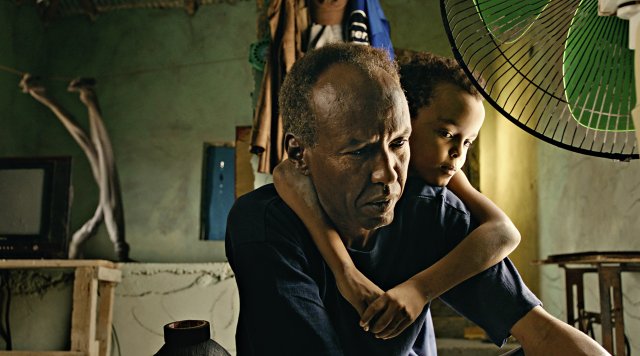
THE VILLAGE NEXT TO PARADISE
Mo Harawe, Austria, France, Germany, Somalia 2024 

THE VILLAGE NEXT TO PARADISE | © Viennale

Jury statement: The jury awards the Vienna Film Prize 2024 to a film that succeeds with impressive openness in showing a reality that often remains abstract from a European perspective - or is reduced to a headline in the form of news reports. Shot in Somalia, largely with a local team and inexperienced actors, THE VILLAGE NEXT TO PARADISE is first and foremost about the everyday life of a family. Shot by shot, our perception of the multi-layered ramifications, circumstances, dreams and difficulties of the protagonists shifts. Many things, such as people's longing for belonging and solidarity, are conveyed subtly and at the same time full of love. Like traces along the wayside, clues can be interpreted and placed in larger - sometimes global - contexts. Much of the story is told in breathtakingly photographed images, which director Mo Harawe gives trust and time to linger. We are surprised by successive twists and turns and a matter-of-factness with which beauty and tenderness, gravity and complexity interpenetrate each other. Harawe's first feature film is thus cinema in the truest sense of the word and leaves us with a lasting impression. With a reverberation that questions our own learned perspectives on our world (not only cinematically).  

Special Jury Award:

FAVORITEN
Ruth Beckermann, Austria 2024

Jury statement: In FAVORITEN, Ruth Beckermann directs her probing and penetrating gaze from Vienna to the intersection of two crucial, neuralgic - and global - issues of our time: : the idea/possibility of living together in a place where most students are multilingual and do not speak German as their first language (as is the actual reality in Favoriten, probably Vienna's most diverse district) and the idea/possibility of passing on knowledge as a key component for social interaction in an evolving and functioning society. The results of Beckermann's patient observation in a Viennese elementary school and over several years are a true documentary stroke of luck. FAVORITEN provides concrete and empathetic proof that the youngest generations deserve our trust, that it is more worthwhile than ever to talk about educational justice, and that harsh realities and loving community need not be contradictory. Last but not least, FAVORITES shows that the commitment of one person - embodied in the film by the dedicated, caring and humanly involved teacher Ilkay Idiskut - can make all the difference for so many. The last time director Ruth Beckermann was awarded the Vienna Film Prize was 28 years ago. With the Vienna film FAVORITEN, which tells much more than just a Vienna story, a return is inevitable.

VIENNALE AWARD OF THE STANDARD READER'S JURY

DER STANDARD organizes the Standard Audience Jury Award again this year. The jury members select a film from the festival entries that does not yet have a distributor in Austria. If the winning film subsequently finds a distributor, DER STANDARD supports the film's release with free advertising space in the newspaper.

Jury: Constanze Liko, Carmen Petrosian-Husa, Stefan Rudigier

FARIO
Lucie Prost, France 2024 

FARIO | © Viennale

Jury statement: Lucie Prost's film Fario establishes its own visuality, showing profound insights into the inner life of a young man against the backdrop of current problems. With atmospheric density and a subtle narrative style, the director draws relationships between man and animal, family and friends. Themes such as grief and trauma are presented in a cathartic way, culminating, in the words of Prost, in a “story of a rebirth.”  

FIPRESCI AWARD (INTERNATIONAL FILM CRITICS AWARD)

FIPRESCI, the International Federation of Film Critics, was founded in 1930. The association is dedicated to the cultivation of journalistic ethics and represents the professional interests of its members. The members of FIPRESCI come from all over the world and meet in small juries at numerous film festivals to award the award of the International Federation of Film Critics. Usually they choose - as at the Viennale - from a number of first and second features by young filmmakers.

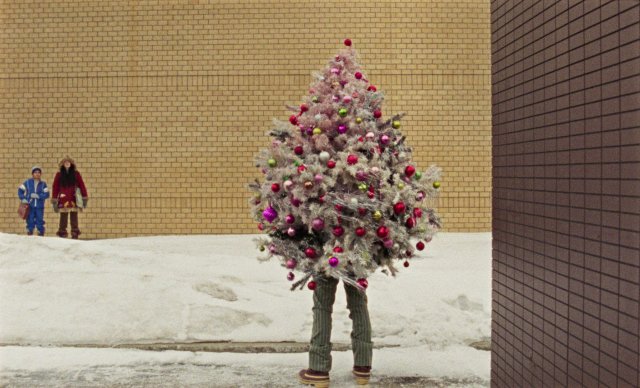
Image of movie Une langue universelle

UNE LANGUE UNIVERSELLE (UNIVERSAL LANGUAGE)
Matthew Rankin, Canada 2024

Jury statement: We decided to award a film that deals with relevant topics such as migration and displacement in an original way. In this cleverly staged comedy that unites different worlds - both in the geographical and cinematic sense - we lose our sense of time, space and language. We are mostly left with references to other films and filmmakers. This unique work is not only a declaration of love to the Iranian cinema of the 1980s and 1990s, but also to the dry humor usually associated with Nordic countries. “In the Name of Friendship”, the FIPRESCI Prize of the 62nd Viennale goes to UNE LANGUE UNIVERSELLE (UNIVERSAL LANGUAGE) by Matthew Rankin. 

ERSTE BANK FILM AWARD – Vermehrt Schönes!

This year, for the 14th time, the Erste Bank Film Award, initiated and sponsored by Erste Bank, will be awarded in cooperation with the Viennale, the Deutsches Haus at NYU and the Anthology Film Archives. The Erste Bank Film Award is awarded among the Austrian film productions screening in the Viennale program via an independent jury. The Film Award allows for a stay in New York City including a work presentation at Anthology Film Archives.

Jury: Silvia Bohrn (cultural manager), Nicolas Mahler (comic illustrator, artistic director of the School of Poetry), Boris Manner (philosopher, curator), Jed Rapfogel (film programmer Anthology Film Archives)

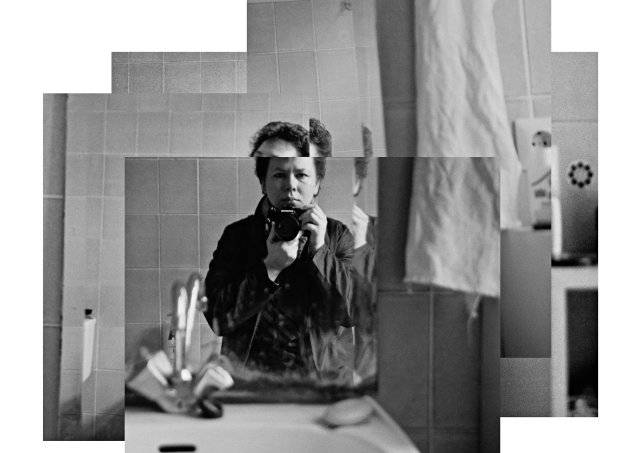
Ješt nejsem, kým chci být | © Viennale

JEŠTĚ NEJSEM, KÝM CHCI BÝT (I’M NOT EVERYTHING I WANT TO BE)
Klára Tasovská, Czech Republic, Slovakia, Austria 2024 

Jury statement: 1968 Prague, 1979 Tokyo, 1990 Berlin. Part of the Czech counterculture, celebrated fashion photographer, chambermaid at the Intercontinental Hotel. These are some of the stages in Libuše Jarcovjáková's life. As the child of a Prague artist couple, she was drawn to photography at an early age and it became her great passion. “Yes, it's a compulsion. I am extremely attracted to mirrors and their reflections. I take pictures everywhere, on the train, in the toilet,” remarks the artist herself in 2021. Klára Tasovská has created this film from more than 70,000 photographs as a rapid succession of snapshots of an eventful and dazzling life, which is literally seen through the eyes of the protagonist. The rhythmic montage combines wonderful black-and-white photographs, diary entries and an outstanding soundtrack to create a sensual overall experience. The audience soon forgets that these are still images. They are drawn into a maelstrom that they cannot escape. This film is a portrait of a different kind: direct, unpretentious and moving. Simply great cinema.

V'24 Events

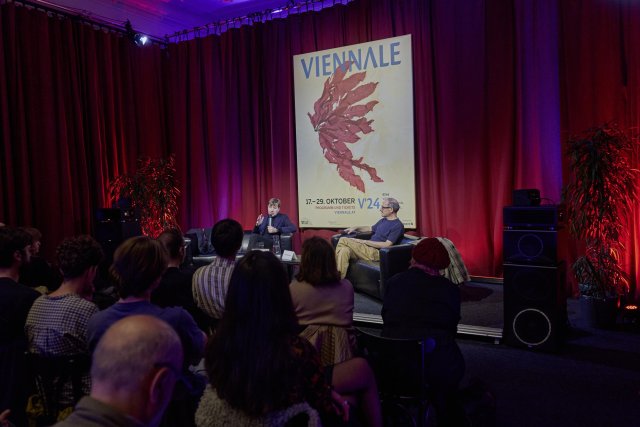
Serra, Zentralino
Viennale Zentralino, Talk with Albert Serra

This year's supporting program took place in a new format: the Viennale Zentralino hosted six interesting talks and masterclasses with Joshua Oppenheimer, Albert Serra and Bruno Dumont, among others, which transformed the upper floor of the Metro Kinokulturhaus into a place for concentrated discussion and reflection on the films and filmmaking. The highly coveted Viennale parties took place this time in three established club institutions and filled the locations to capacity  – no wonder with DJs such as Viennale returnee Lars Eidinger, Mambo Chick, Sarah Farina or the filmmakers Arash T. Riahi, Elsa Kremser and Levin Peter.