In our VIENNALE DAILIES you'll find everything you need to know about what's happening around the festival!
I’ve been changed watching films or reading books or hearing music, and that helps you to live your life.
Juliette Binoche
FILMTIPS FOR TODAY
MEMORY
Dir: Vladlena Sandu
France, Netherlands 2025 | 98 minutes | russOV w/ENG subtitles
Tuesday, October 21, 4.00 pm: METRO, HISTORISCHER SAAL
Wednesday, October 22, 1.00 pm: FILMMUSEUM
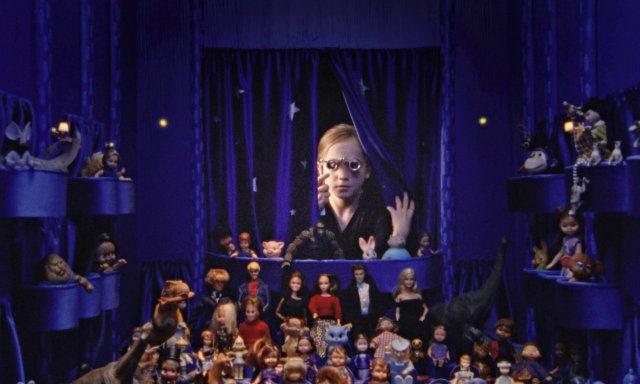
Memory works very much like montage. One recollection resonates with another, which awakens yet another, and so on, thus establishing thematic series which give ever-increasing structure to the entire process (of remembering) until it becomes inscribed into the consciousness. This is perfectly illustrated by MEMORY, as Vladena Sandu’s autobiographical film unfolds by way of discontinuous associations in which parallel, interrelated motifs are repeated, eventually coming together to form the symbolic matter of the filmmaker’s own life. This entails revisiting childhood without betraying it. The end of the Soviet Union and the first war between Chechnya and Russia are not merely historical events here, but occurrences etched into the intimate life of a child who observes, learns and wonders why the figure of Lenin is ubiquitous, how a country can cease to exist from one day to the next and why another version of history suddenly begins to be taught at school. The film contains characters rendered perversely indelible by how they embody the terror of an era, such as the filmmaker’s grandfather, who she calls by his name; and yet there are also moments of great joy, such as when she discovers cinema. (Roger Koza)
In the presence of Vladlena Sandu.
LE DOUBLE AMOUR
Dir: Jean Epstein
France 1925 | 104 minutes | French intertitles w/ ENG subtitles
Tuesday, October 21, 7.00 pm: FILMMUSEUM
Monday, October 24, 6.00 pm: FILMMUSEUM
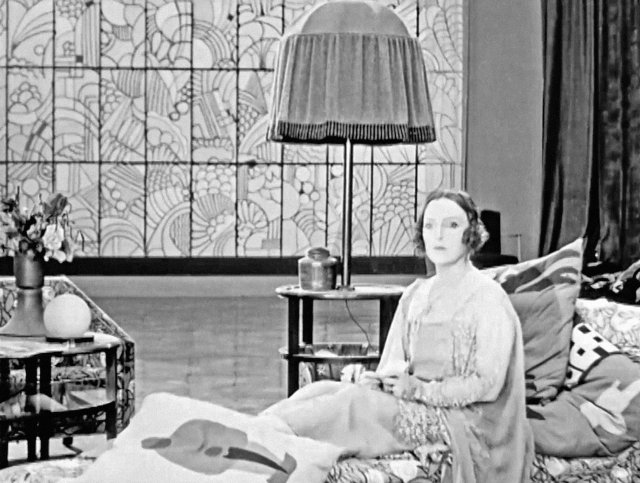
A relatively classic melodrama, LE DOUBLE AMOUR was Jean Epstein’s third film for the Albatros production company, made between February and April of 1925. Like for L’AFFICHE (1924), Marie Epstein wrote the screenplay, which gave full expressive power to Nathalie Lissenko, star of Montreuil’s Russian studio. She plays the part of the Countess Maresco, simultaneously a mother and a dejected woman, a wonderfully tragic aristocratic figure to whom Camille Bardou, Pierre Batcheff and Jean Angelo gravitate, each in harmony with her collapses and laments. LE DOUBLE AMOUR is a film about a world of false appearances, gambling, baccarat and elegance. The dresses and suits were supplied by Drecoll and Paul Poiret. The photography is precise, and the lighting of the exteriors (almost all shot in Cannes) and the editing effects seem to foreshadow the filmmaker’s future poetic works, like the recurring shot of waves breaking against the rocks, an image around which the story is structured. To quote Langlois: “Just screen a reel of COEUR FIDÈLE (1923) and a reel of LE DOUBLE AMOUR to see Epstein’s progress”. (Emilie Cauquy)
With live music by Elaine Brennan.
Una pelicula de miedo
Dir: Sergio Oksman
Spain, Portugal 2025 | 72 minutes | OV w/ENG subtitles
Tuesday, October 21, 9.15 pm: URANIA
Wednesday, October 22, 1.30 pm: METRO, HISTORISCHER SAAL
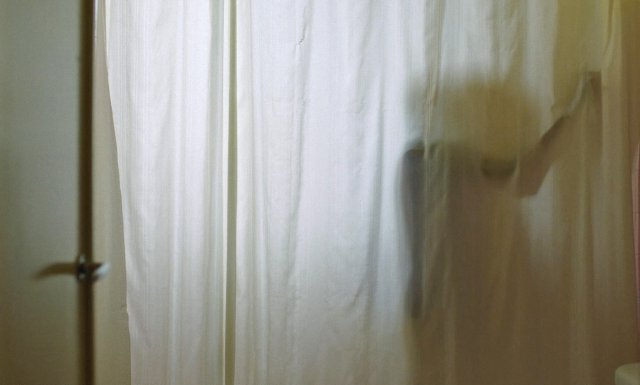
Every family is haunted by its own history, traumas that are inherited and gestures that are repeated from generation to generation, like so many ghost stories. Fleeing the summer heat, Sergio Oksman and his twelve-year-old son Nuno accept a friend’s invitation to spend a few days in an old abandoned hotel in Lisbon, where the air is thick with past dramas and former luxury. For Nuno, it is the setting for a horror film. For Sergio, it is an opportunity to revisit the images he shot in the same city years earlier, about an old Portuguese murderer. With the languid mood of late summer, UNA PELICULA DE MIEDO gradually weaves together different ideas, themes and images both original and shot by others, as Oksman slowly but surely confronts a kind of family curse: that of the father who abandons his children, as his grandfather did first, and his father years later. And the fear of this curse, maybe real, maybe imagined, is the true source of terror. Is there anything more frightening than family? And as the days of that singular summer pass by, a sliver of hope also appears. By filming the last summer of Nuno’s childhood, Oksman captures something that he himself never had: the love of a father. (Gonzalo de Pedro)
In the presence of Sergio Oksman.
PROGRAM TIP
Tomorrow marks the start of the MONOGRAPHY: ANGELA SUMMEREDER.
You can find the complete program HERE.
Read more about the monography HERE.
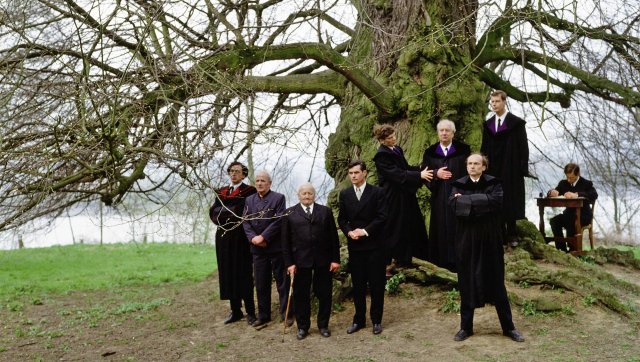
Angela Summereder was only 23 when she shook up Austrian cinema with her debut film ZECHMEISTER in 1981. By breaking down the boundaries between documentary, essay, and fiction, she rejected conventional narrative patterns; she rebelled against chauvinistic attitudes and was regarded as a hope for the future when the subsidy system started. But then she put her career on hold for almost 25 years to focus on her children and family – a “typical” biography of a woman.
It was only in 2006, when she rejoined the ranks of feature filmmakers with VERMISCHTE NACHRICHTEN: shot on a shoestring budget, it follows the road between and the people of Ort and Ried im Innkreis, where she was born in 1958. Whether in training courses for the long-term unemployed in (JOBCENTER), with dreamers and charlatans (AUS DEM NICHTS), or the famous refusenik from the book penned by Herman Melville in her most recent work, B WIE BARTLEBY, which will premiere at the Viennale – again and again, her films deal with outsider positions. Summereder approaches them with a special blend of curiosity, empathy, and a willingness to experiment.
In each work she seeks a new form of expression and invites us to look, listen, discover the unfamiliar – and to marvel. As part of the Viennale, the Filmarchiv is presenting newly restored versions of ZECHMEISTER and the short film BLUT IN DER SPUR, a collaboration with with Bady Minck, as well as Summereder’s feature-length films. This will be followed by rare short films and influential works by other filmmakers.
In the presence of Angela Summereder.
A Filmarchiv Austria program.
SOME OF OUR GUESTS TODAY

Juliette Binoche
Director & Actress in
In-I: In Motion
Angela Summereder
Director of
B wie BARTLEBY
MONGRAFIE: ANGELA SUMMEREDER
Lucrecia Martel
Director of
Nuestra tierra
Murat Fıratoğlu
Director of
Hemme'nin öldüğü günlerden biri
Lilith Grasmug
Director of
SOME OF YOU FUCKED EVA