BY FLORIAN WIDEGGER
The viewer must be able discover the film. To watch. Listen. Marvel. A sound. A new image. Surprise. Discovery. Watching a film should be like getting to know a person.
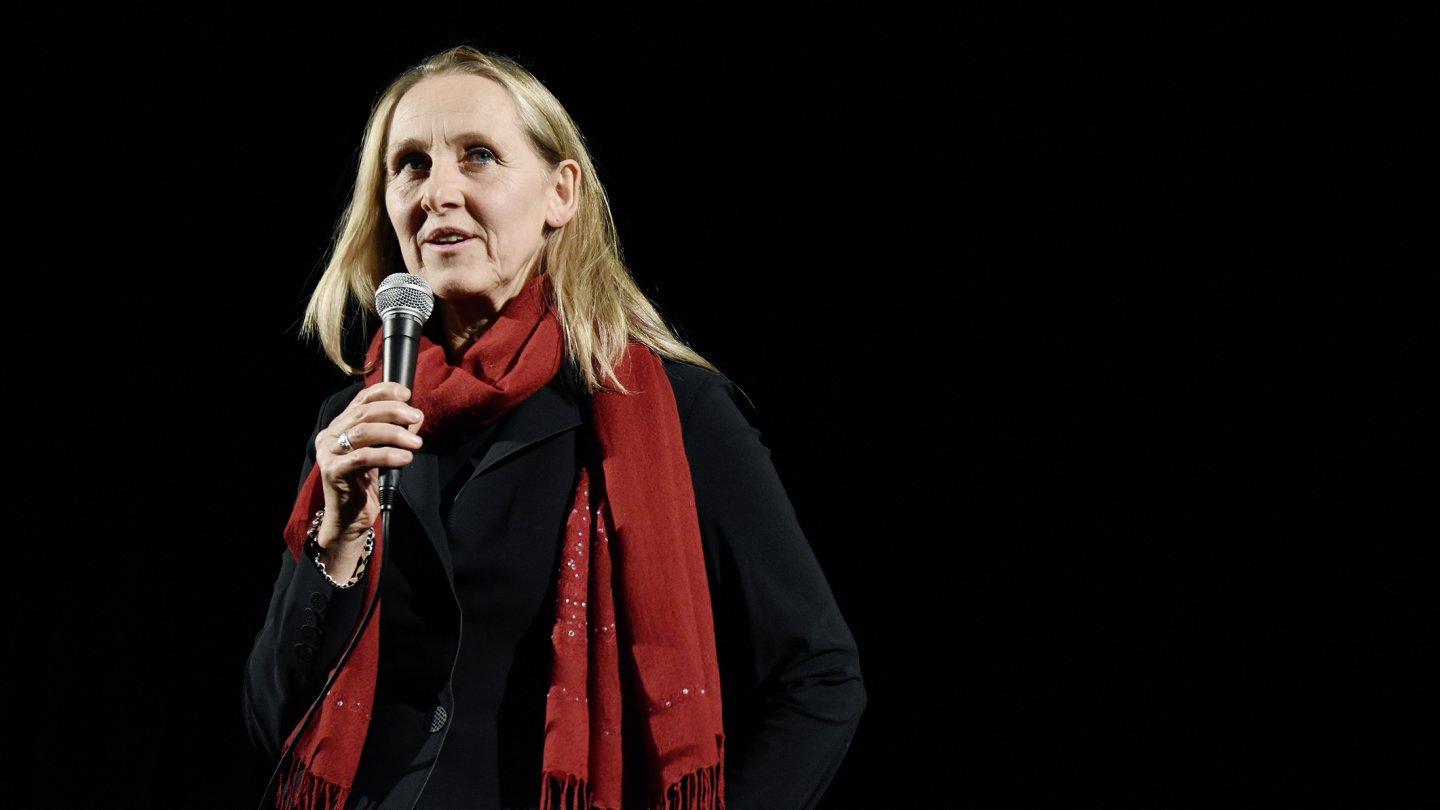
When Angela Summereder wrote these lines, which explain what she expects of cinema, she was 23 and had completed her first feature ZECHMEISTER (1981): an audacious blend of documentary and fiction which contemporary reviews repeatedly referred to as “ethnographic”—it was certainly not comparable to anything else in the Austrian film landscape up to that time. Summereder used the criminal case surrounding Maria Zechmeister, sentenced without any proof for the treacherous murder of her husband and forced to serve a 17-year prison term, to create a profound exploration of a mentality in the region that she is also from, somewhere between gossip and silence, between sanctimoniousness and resentment.
Born in Innkreis in Upper Austria in 1958, she heard about Zechmeister’s story early on. She first properly grappled with the case while studying journalism, sifting through court and local press archives for material. She returned to her findings only a short time later to create a narrative slide show with sound for her entry exam to the Filmakademie in Vienna.
From the very first time Angela Summereder went to the cinema at around 12, it became clear to her that she would gravitate towards film: having grown up around highly reserved people, she found a whole other world on the big screen where people talked about their feelings and gave them full expression. It would take a long time for this desire to become reality, however: there were hardly any possibilities to seriously engage with film in rural Upper Austria in the early ’70s, aside from a few secret hitchhiking outings to the nearest bigger towns. When she saw Werner Herzog’s HERZ AUS GLAS (1976) on one of these trips, this desire became even stronger. Yet she started out by studying journalism in Salzburg in 1977, which is where she found out about the Filmakademie, applied, and was accepted.

“Go ahead and complete your training yourself”
Yet her time at Metternichgasse 12 in Vienna was only to last little more than half a year. After she set off on an adventurous odyssey to meet Werner Herzog in Munich and wanted to give an account of their conversations in class, her directing professor responded by saying, “Ms. Summereder, if you think that you can learn more from Werner Herzog than from us here, then go ahead and complete your training yourself.” This self-directed training took place at the cinema first and foremost, primarily at the Austrian Film Museum (which was another thorn in the side of the conservative professors, who took their bearings from a more practically minded brand of cinema). At the Film Museum, Summereder also met Straub-Huillet actor Benedikt Zulauf, who had just left behind Frankfurt am Main and his studies with Adorno in order to become a librarian at the institution—a set of circumstances to be explored in Summereder’s most recent film B WIE BARTLEBY (2025). The rebellious, cinephile student found trips to the cinema and the lectures given by teaching staff, such as legendary Arbeiterzeitung critic Fritz Walden or film historian Agnes Bleier-Brody, to be “instructive”.
After Summereder was forced to leave the Vienna Filmakademie (during the first semester, students were expected to pass an examination which consisted of putting a disassembled Bolex camera back together in front of the professors and explaining how the rotary disc shutter works, which she agonisingly failed to do), she started writing the script for ZECHMEISTER in earnest with a “mixture of despair and delusions of grandeur”: “one first challenge was making contact with Maria Zechmeister: a careworn, fearful, mistrustful woman, but somehow I managed to get her to give the film her approval over time.” For the production, she looked to Berlin for orientation, where she got to know a new, feminist scene and met her later cinematographer Hille Sagel as well as other female collaborators, such as director Elfi Mikesch and editor Dörte Völz. As the head of production in Vienna, Monika Maruschko put all her energy into the realisation of this feminist film within the chauvinistic Austrian film production landscape.
A hope for the future
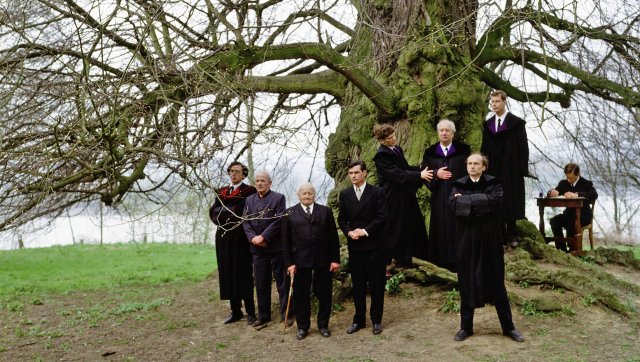
In Presse, Franz Manola described the result as a film “that one wouldn’t necessarily expect at this moment in time, let alone as a debut (…). Ultimately, it would be possible to swap Summereder’s film for the entire Austrian film production of the last year without that being a bad deal in terms of artistic value.” ZECHMEISTER screened at the Berlinale and was the first film to screen at the new Stadtkino am Schwarzenbergplatz in November 1981. Like its director, it was seen as a hope for the future, although its unapproachable form wasn’t met with unanimous enthusiasm: jack of all trades Rudi John, for example, called the film a “sterile, arrogant visual mystery” in Kurier and gave Summereder a dressing down in the same breath, referring to her as a “filmenist”.
Shortly afterwards Summereder became pregnant with her first child, but at that time saw filmmaking and motherhood as irreconcilable. Halting her practice, she instead took on her own training, as she had already threatened to do, returning to her university courses in journalism and German literature following the birth of her second child, juggling childcare and her studies before graduating with a dissertation about the German-language films of Jean-Marie Straub and Danièle Huillet. A typical female biography, as it were.
It was 25 years before she made another feature-length film, 2006’s VERMISCHTE NACHRICHTEN: shot on a tight budget, it was a first attempt to find her way back into the medium, an exploration of the road (and its people) between Ort and Ried im Innkreis—the same road to which she would dedicate an entire cycle across her oeuvre, stretching from ZECHMEISTER via JOBCENTER (2009) to AUS DEM NICHTS (2015). The documentary short ABENDBROT (2008) is about the work (and rehearsal process) of a women’s memory theatre ensemble in Vienna that actor/director Herbert Adamec (who played the defence lawyer in ZECHMEISTER) had founded.
Curiosity, joy in experimentation and empathy
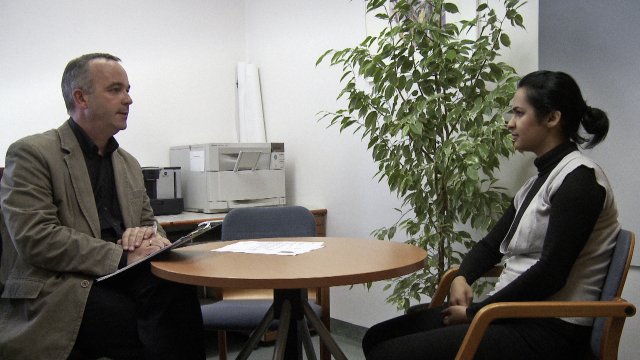
JOBCENTER was her first “real” feature-length work, shot with a small amount of film funding after nearly 30 years, and deals with five people of different ages receiving training at an Austrian job centre entitled “Success in the Labour Market”. Summereder made the film because she was now working there as a trainer and was thus reflecting on her own actions on two levels. Despite numerous favourable reactions, she had to leave the job centre following the film’s release. But at least she was on her way back to film.
In 2013, she made the philosophical goat film IM AUGENBLICK. DIE HISTORIE UND DAS OFFENE together with Othmar Schmiderer and Bodo Hell. In 2015, she released AUS DEM NICHTS, a daring hybrid of fiction, documentary and essay film—at that point her most ambitious project—that took her from her native Innviertel to India. The film investigates the story of Carl Schappeller, who is from the same part of Austria as the filmmaker and claimed to have invented so-called “spatial power”. She used the example of this charismatic swindler to explore fundamental questions about the often-blurred boundaries between science, faith and the power of imagination, which cinema also possesses.
Since then, another decade has passed. The handful of projects that Angela Summereder was able to make are set against the various projects that were not realised and rejected by the film funding bodies. With B WIE BARTLEBY, a new film by Summereder receives its Austrian premiere at the Viennale: a project that she “inherited” from her now-deceased partner Benedikt Zulauf, who was transfixed by Herman Melville’s famous dissident his whole life, and which she made with a primarily young, female team. The curiosity, joy in experimentation and empathy that have characterised her works to date along with her refusal of conventional narrative patterns, are boiled down to their essence in this film in particularly witty, amusing fashion. “Ultimately, I’ve always been interested in themes that make outsider positions the heart of the matter and don’t go at things like a bull at a gate. It’s about finding an adequate language for each film.”
This retrospective presents works by Angela Summereder, including a digital restoration of ZECHMEISTER that was completed in 2025 in close collaboration with the filmmaker and cinematographer Hille Sagel, rendering this key work of New Austrian Cinema accessible again in suitable quality, as well as a restoration of her short film BLUT IN DER SPUR (1979). To complement this, the Filmarchiv Austria is showing the two short films ABENDBROT and IM AUGENBLICK. DIE HISTORIE UND DAS OFFENE at the METRO Kinokulturhaus in October and a carte blanche that includes films by Guillaume Cailleau & Ben Russell, Valeska Grisebach, Peter Kubelka, Claire Simon and Jean-Marie Straub & Danièle Huillet.
Translation from the German by James Lattimer.