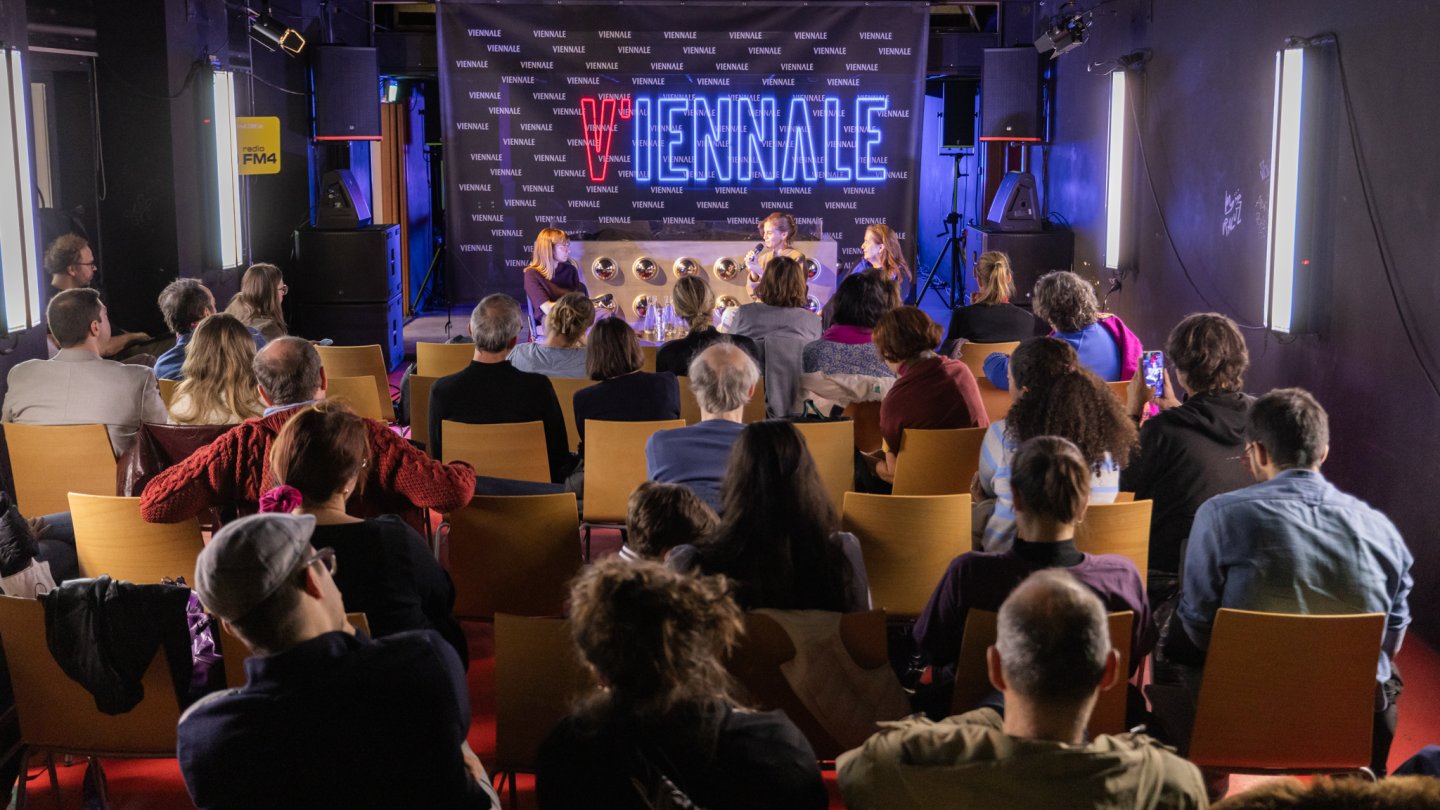
In our VIENNALE DAILIES, you’ll get daily updates on everything happening around the festival!
Maybe the graceful look I carry from the east, beyond the veil of clichés that usually stigmatizes the occidental point-of-view, will allow the orient to be restored in its just and rightful place and value.
Jocelyne Saab
PROGRAMTIP: CINEMATOGRAPHY: ALL BRIGHT AND WONDERFUL?
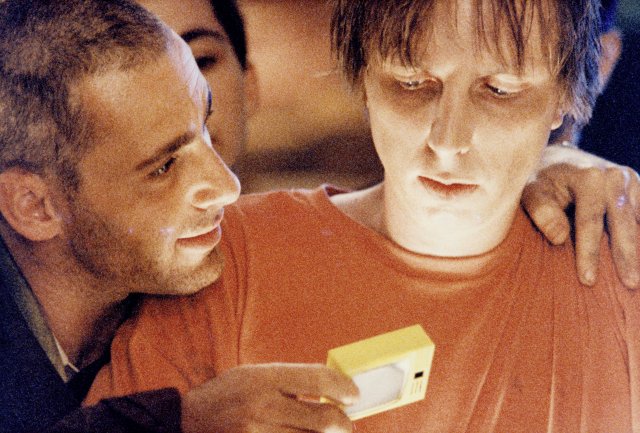
AUSTRIAN FILMS OF THE 1990s
At the beginning of the 1990s, much seems possible. The Cold War is over, borders to the East are opening, and Europe is growing closer together. Mobility, consumerism, and new technologies shape everyday life, while familiar social certainties are slowly losing their significance. Austria is undergoing profound change – politically, culturally, and socially.
Austrian cinema also responds sensitively to these changes. It places at its centre figures who move between origins and the future, the provinces and the metropolis, different languages, cultures, and ways of life, as their sense of direction begins to falter. Traditional images of Austria give way to narratives of in-between spaces and peripheral zones: railway stations, shopping centres, and nightclubs become settings for a society that is reorganising itself and shaped by previously unfamiliar influences from other cultures. While the country opens up to the outside, debates about identity and belonging intensify within.
At the same time, a new generation of filmmakers enters the scene, whose work is less interested in grand national narratives than in the everyday lives of their characters, urban spaces, and influences from popular culture, and in which documentary immediacy meets stylised visual worlds. Between euphoria and uncertainty, the five selected works in this programme by Filmarchiv Austria can also be situated. They invite us to (re)discover the 1990s as a lived experience that continues to resonate into the present.
A program by Filmarchiv Austria.
FILMTIPS
Im Umkreis des Paradieses
Yulia Lokshina
Germany 2026, 121 min, OV w/ENG subtitles
Tue, Oct 27, 9.15 pm: METRO, HISTORISCHER SAAL
Wed, Oct 28, 2 pm: URANIA
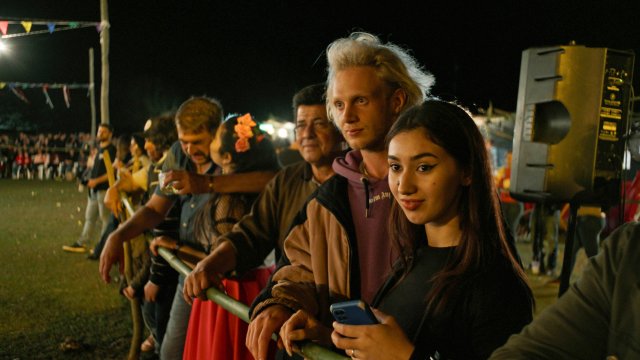
What matters most in Yulia Lokshina’s films is the way ideology comes to shape experience. Here she turns her attention to a recently established community of Austrians and Germans in Caazapá, a town little known outside Paraguay. Called “El Paraíso verde,” the community brings together people who share a peculiar set of convictions: they reject vaccines, equate Satanism and paedophilia with globalists and those who advocate gender plurality, and believe that Muslims are gradually taking over Europe and that a Third World War is imminent. Their uninhibited 70-year-old founder Erwin Annau, a financier who plays the guitar and does yoga, is seen going about his daily business, as are its other members, some of whom practice spiritual healing at a distance. Local inhabitants also figure in the film, and several of them seem to be caught up in fantasies of their own. Lokshina’s manner is respectful, but hardly neutral. Her evocation of the reactionary nineteenth-century community founded in Paraguay by Friedrich Nietzsche’s sister points towards a critical recurrence: the old alliance between esotericism and reactionary thought reappears here in fresh garb. There is a colonial undertow here too that the film does not allow us to overlook. (Roger Koza))
Ali je bilo kaj avantgardnega?
Jurij Meden, Matevž Jerman
Slovenia 2024, 98 min, OV w/ENG subtitles
Wed, Oct 28, 3.15 pm: STADTKINO IM KÜNSTLERHAUS
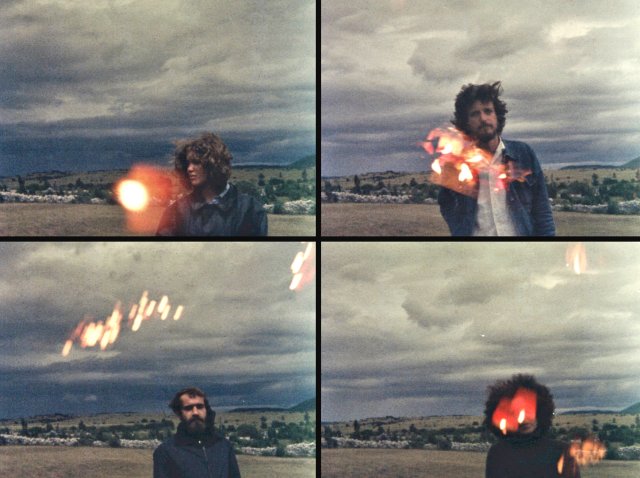
ALI JE BILO KAJ AVANTGARDNEGA? opens with a mind-bending cascade of diverse, fascinating images from a whole slew of unknown short film sensations, ranging from (literal) explosions to painterly abstraction and brain-melting psychedelia. Where does this embarrassment of riches come from? For the next ninety minutes, directors Matevž Jerman and Jurij Meden assemble an entertaining and illuminating chronicle of their genesis: So-called “amateur cine clubs” were founded all over the former Yugoslavia during the Socialist era (1945–1991), allowing state-supported access to filmmaking for basically everybody. The results were insanely multi faceted and the best of these works easily measure up to the established highlights of the international avant-garde. Exploring the recently restored Slovenian film heritage that sprang from this movement, Jerman and Meden delve into the incredible histories of its major discoveries. Drawing on punchy editing, split screen techniques that bring the maximum amount of material to the fore and interviews with experts, directors and still-living representatives like tableaux-film genius Karpo Godina, ALI JE BILO KAJ AVANTGARDNEGA? functions as a breathless primer that will leave you hungry for more. (Christoph Huber)
THE LAST SUNSET
Robert Aldrich
US 1961, 112 min, OV
Tue, Oct 27, 6.30 pm: FILMMUSEUM
Thu, Nov 12, 8.30 pm: FILMMUSEUM
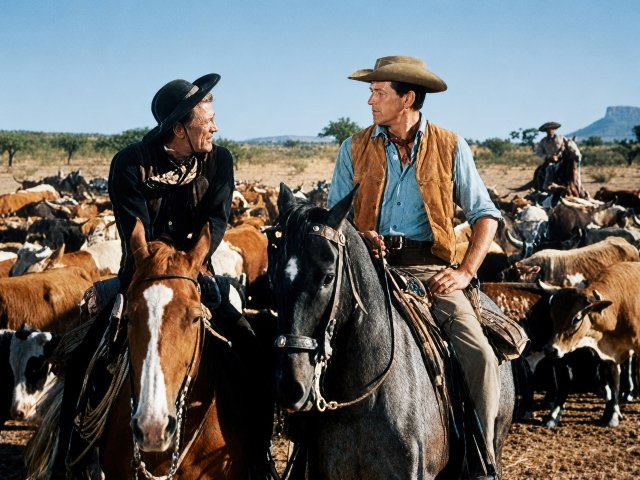
Aldrich’s uncompromising nature made him a persona non grata in Hollywood in the late 1950s, yet he was still able to shoot THE LAST SUNSET in Mexico with Kirk Douglas. Aldrich succeeded in creating a fascinating Freudian Western nonetheless, which is staged with lyrical verve in spite of its fatalism, moving melodramatically towards bizarre twists, with the genre elements functioning more as extra seasoning. Cowboy Brendan O’Malley (Douglas) is chased across the border by lawman Dana Stribling (Rock Hudson) and comes across his childhood sweetheart Belle (Dorothy Malone), who has married the alcoholic John Breckenridge (Joseph Cotten). Breckenridge hires the two adversaries to drive a cattle herd to Texas: O’Malley and Belle’s daughter Missy (Carol Lynley) grow closer, as an inevitable confrontation looms—which comes to pass in a precipitous manner. Although acclaimed as one of the most unusual psychological Westerns, THE LAST SUNSET remained a terrible memory for Aldrich because of his clash with Douglas during the shoot. But like VERA CRUZ (1954), it would come to influence subsequent Spaghetti Westerns—its finale left traces in both Sergio Leone’s ONCE UPON A TIME IN THE WEST (1968) and Sergio Corbucci’s COMPAÑEROS (1970). (Christoph Huber)
EINIGE UNSERER HEUTIGEN GÄSTE
Andrea Pallaoro
Director of
THE ECHO CHAMBER
Valeska Grisebach
Director of
DAS GETRÄUMTE ABENTEUER
Yana Radeva und Syuleyman Letifov
Actors in
DAS GETRÄUMTE ABENTEUER
Beatrice Gibson
Director of
AT NIGHT
Julieta Juncadella
Producer of
WEICHEN
Jannis Lenz
Director of
OASE
Tobias Nölle
Director of
Tristan Forever
Yulia Lokshina
Director of
IM UMKREIS DES PARADIESES
Isabelle Bertolone
Producer of
Im Umkreis des Paradieses
Rachel Lauren Mueller
Director of
They’re Here
Viennale Meeting Point

The Viennale is once again inviting you to the Meeting Point at the stylish Intermezzo Bar of the official festival hotel, the InterContinental Vienna. One of the city’s most renowned bars becomes a meeting place for festivalgoers, filmmakers, and guests. The bar provides the ideal setting to chat, exchange ideas, and discuss the festival over classic cocktails and drinks in a relaxed atmosphere – a stylish way to round off an intense festival day. With your valid Viennale ticket for the day, you can enjoy these drinks at the reduced price of €10.
INTERMEZZO BAR
Daily from 6 pm to 2 am
Hotel InterContinental Vienna
Johannesgasse 28, 1030 Vienna