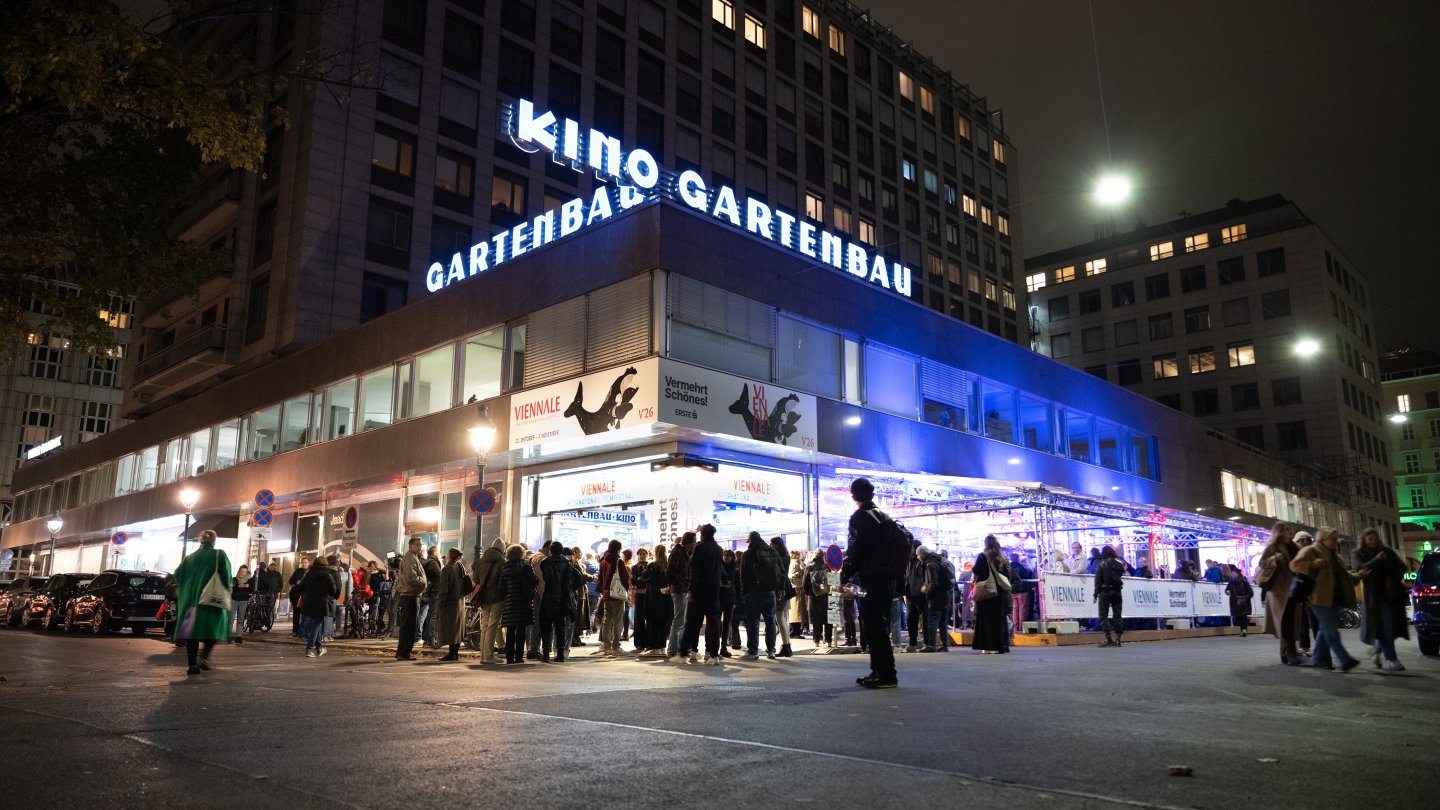
In our VIENNALE DAILIES, you’ll get daily updates on everything happening around the festival!
Der Blues ist keine traurige Musik. Er ist die Medizin gegen die Traurigkeit.
Al Cook
CLOSING FILM: THE LONELIEST MAN IN TOWN
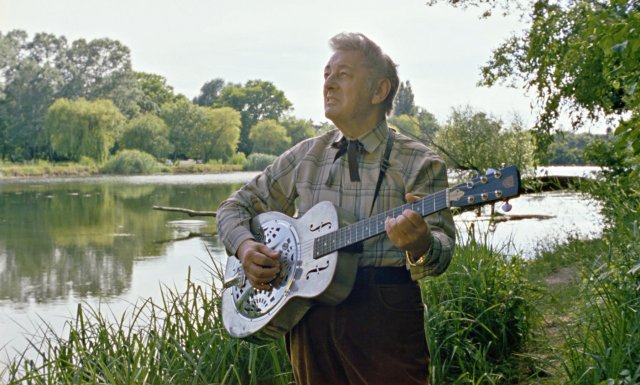
Rainer Frimmel, Tizza Covi
Austria 2026, 86 min, VI & OV w/ ENG subtitles
Tue, Nov 3, 8.45 pm: STADTKINO IM KÜNSTLERHAUS
Tue, Nov 3, 9 pm: FILMMUSEUM
Tue, Nov 3, 9 pm: METRO, HISTORISCHER SAAL
Tue, Nov 3, 9.15 pm: URANIA
Audio description will be provided at screenings at Stadtkino im Künstlerhaus and Metro
Waiting numbers for remaining tickets will be issued 30 minutes before the start of the screening.
Al Cook is a Viennese musician. A throwback Elvis Presley-type singer and former local star, he now feels like an outsider in a modern world that seems a million miles away from his personal universe of old blues and 1950s Hollywood, VHS tapes, vinyl records and analogue players. Al is also the last person living in an old building slated for demolition, and he refuses to leave it despite corporate attempts to force him out. Known for their deeply empathetic approach to their characters, Tizza Covi and Rainer Frimmel cast Al Cook—appearing here under his birth name Alois Koch—in a role directly based on his personality. Yet the film transforms his real-life image into an almost Beckettian performance of reverie and melancholia, loneliness and absurdist oblivion. As in the directors’ previous works, in which real people joyfully played fictionalised versions of themselves, Al embodies his character with attachment, irony and a sense of liberation. Like a clownish character from a Jacques Tati film—another alien lost in a modern city—he wanders through the deserted streets of a Vienna in flux feeling not only disconnected, but also blissfully free from having to belong to the new order. (Evgeny Gusyatinskiy)
SOME OF OUR GUESTS TODAY
Tizza Covi and Rainer Frimmel
Directors of
THE LONELIEST MAN IN TOWN
FILMTIPS
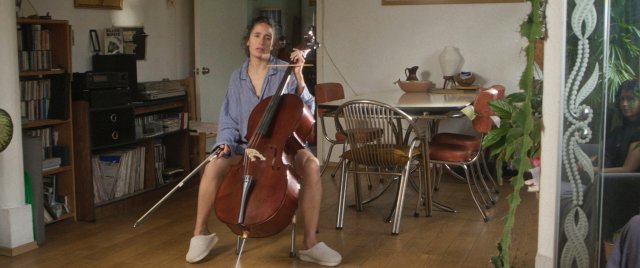
Lo demás es ruido
Nicolás Pereda
Mexico, Canada, Germany 2026, 71 min, OV w/ ENG subtitles
Tue, Nov 3, 3.30 pm: STADTKINO IM KÜNSTLERHAUS
One afternoon, a cellist and composer sits down for a television interview, her peers beside her. The set-up steadily becomes an echo chamber: like a chorus, the words of these hardworking, intelligent, wickedly funny women bounce off a wall of pedantic men. An intricate composition of urban noises takes shape as microtonal humour reveals new layers of family drama, progressively forming a chromatic suite. If Rosa is searching for cello sounds that can still surprise her, Nicolás Pereda performs on his set of instruments like a skilled musician while demonstrating his own penchant for spontaneity. Each cinematic parameter—sound and image, onscreen and offscreen space, light and darkness—is subjected to controlled variations, yet rigour never outweighs freshness. LO DEMÁS ES RUIDO is a work of mathematical prowess that still feels as loose as a jam session. If Tere associates her beginnings in music with the smell of salt (or a rat, or a bird), the film is a hilarious concerto in which each disparate element resonates with all the others. It is an ode to indirectness—deferred repetitions, lies, and imagined remakes—yet always remains anchored in materiality: we never stop laughing at the dog’s endless barking. (Victor Guimarães)
Hustle
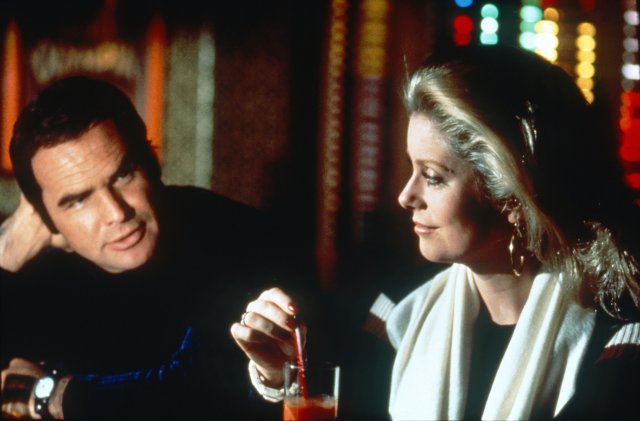
Robert Aldrich
US 1975, 120 min, OV w/FRE/GER subtitles
Tue, Nov 3, 4 pm: FILMMUSEUM
Sat, Nov 28, 6 pm: FILMMUSEUM
Aldrich capitalised on the euphoric success of THE LONGEST YARD to make a second project with Burt Reynolds, which turned out to be one of the darkest contributions to the pessimistic noir revival of the 1970s. What’s more, the crime plot takes a back seat to the central romance, though this too is gnawed away by doubt. Police Lieutenant Phil Gaines (Reynolds) is investigating the death of a young woman in Los Angeles, but his superiors want to shelve this seemingly trivial case as a suicide. Meanwhile, Phil is struggling with his relationship with French luxury call girl Nicole Britton (Catherine Deneuve). Aldrich paints a portrait of a world riddled with corruption that is sinking into melancholic darkness: the cynicism of the powerful clashes with the despair of the “nobodies,” while the protagonists are worn down by the compromises of everyday life. Aldrich’s characteristic anger is almost swallowed up by sadness. He explained the screenplay’s social significance in the following terms: “The aftermath of Watergate is we’re living in a two-tier system of justice and a two-tier system of influence. It’s more than the haves and have-nots, it’s a whole combination of inequality.” (Christoph Huber)
Pelechian Project Programm 2
Tue, Nov 3, 1.45 pm: FILMMUSEUM
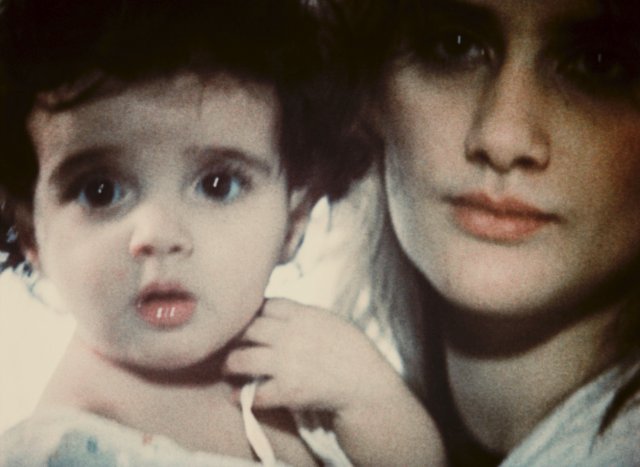
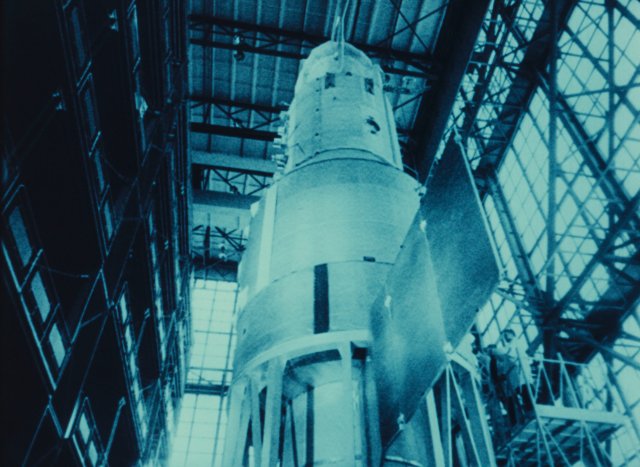
The films of Artavazd Pelechian are somewhat inadequately described as documentaries. Born in Armenia in 1938, in what was then the Soviet Union, Pelechian frequently draws his subjects from history, whether archival footage of the October Revolution and its aftermath in SKIZBE (1967), or the return of Armenian exiles after the horrors of genocide in MENQ (1969). But the term documentary does not even begin to suggest the films’ propulsive energy, fluidity, or sense of lyrical surprise. “Essay film” is sometimes used instead, though Pelechian’s works are typically wordless. The director has himself offered the term “distance montage,” which, unlike the linearity of his Soviet compatriot Sergei Eisenstein, organises shots like a “magnetic field.”
Scale varies dramatically, from the hubris and awe of space exploration in NASH VEK (1983), to the bead of sweat forming on the brow of an expectant mother in KYANQ (1993). His method is like that of a composer, guided by gesture and sensation. Shots and sequences are like musical refrains and accrue new meanings as they repeat. ZEMLYA LYUDEY (1966), for instance, is bookended with a shot of Auguste Rodin’s The Thinker, whose musings, no doubt, deepen after a spiral-like collage of urban activity. Trains commonly appear, from the workers maintaining a perilous railroad in LERNAYIN PAREK (1964), to the passengers who gaze out of a compartment window in VERJ (1992), the wind gently lifting their hair. TARVA YEGHANAKNERY (1975) features shepherds inundated by water, snow and giant herds of sheep, which they still manage to transport in inventive ways; people in Pelechian films are rarely at rest, instead buffeted by the forces of nature and industry. Rarely seen, Pelechian’s entire body of work amounts to less than four hours, and still it was praised by French film critic Serge Daney for being “a missing link in the true history of the cinema.” In moments both grand and granular, Pelechian masterfully conjures a feeling of life in unceasing flux. (Genevieve Yue)
V'26 VIDEOS
Volker Schlöndorff at the Viennale Zentrale at Funkhaus Wien during Viennale 2026. Among other things, he talks about his latest film HEIMSUCHUNG – EINE JAHRHUNDERTGESCHICHTE, the novel it is based on, and his film DIE BLECHTROMMEL, which won the Oscar for Best Foreign Language Film. Moderated by Bert Rebhandl.