Der VW-Komplex
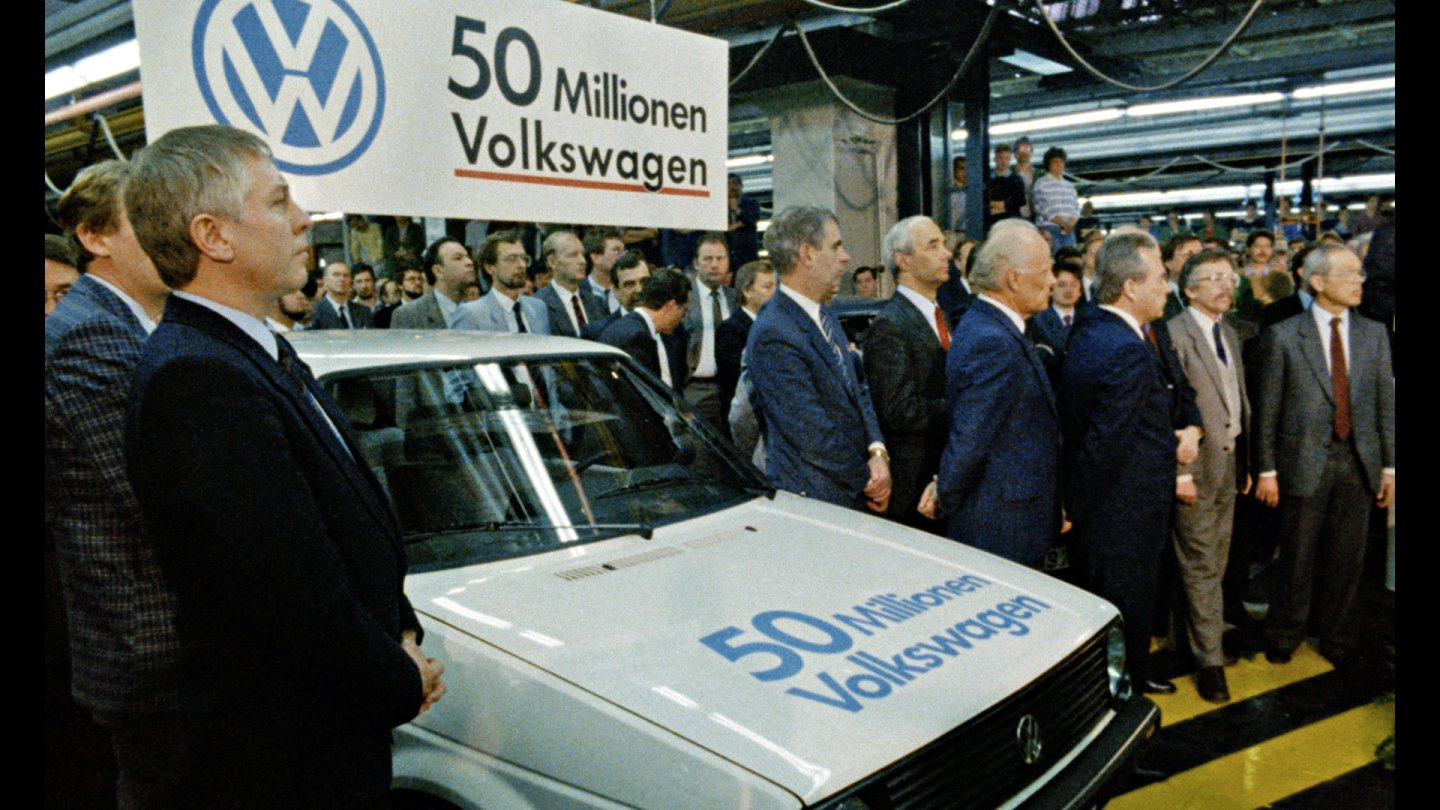


DER VW-KOMPLEX vollzieht die Geschichte von Volkswagen nach, von den Anfängen in den 1930er Jahren bis zur fortschreitenden Mechanisierung und damit einhergehenden Entmenschlichung, die überall da lauert, wo Maschinen nach und nach die Arbeiter:innen ersetzen. Der Konzern produziert aber nicht nur Deutschlands berühmtestes Auto, auch eine weitere Volkswagen-Kreation nimmt Bitomsky unter die Lupe: Wolfsburg, Firmensitz und Hauptquartier, eine Stadt, mehr oder weniger geplant und organisiert vom Konzern, der auf diese Weise nicht nur die Effektivität, sondern auch die Privatleben seiner Arbeiter:innen kontrolliert.
Bitomsky: „Egal wie man einen Volkswagen zusammenmontiert, heraus kommt immer die Bundesrepublik Deutschland.“ (Alexandra Seitz)
Einführung von Christian Petzold.
Revisiting Hartmut Bitomsky’s DER VW-KOMPLEX in the aftermath of the German director’s recent passing isn’t just a reminder of his uniquely cerebral take on documentary cinema, but also underlines the extent to which such fiercely political approaches are still needed today. This final part of Bitomsky’s celebrated Germany trilogy is an essayistic wander through the vast Volkswagen factory in Wolfsburg, zeroing in on the myriad processes that unfold there while making repeated forays out into the local surroundings or back into the past.
With each of these divergent levels tied together by Bitomsky’s drolly incisive voiceover, the peculiarities of 20th century work are thus analysed and the history and topography of the planned city that sprung up around this huge complex explored, with due attention also paid to its National Socialist origins; there’s even time for metacommentary on what it means to represent a factory by way of a VW-themed novel, a spooky unrealised Hitchcock film and the very first moving images to exist. They say that when Volkswagen isn’t doing well, neither is Germany; in the face of the company’s current struggles, the greatest testament to Bitomsky’s timeless approach is that there’s no better moment for a sequel. (James Lattimer)
Hartmut Bitomsky: 3000 HÄUSER (1967), DIE TEILUNG ALLER TAGE (1970), EINE SACHE, DIE SICH VERSTEHT (1971), AUF BIEGEN ODER BRECHEN (1976), DEUTSCHLANDBILDER (1983), REICHSAUTOBAHN (1986), DAS KINO UND DER TOD (1988), B-52 (2001), STAUB (2007)
- Hartmut Bitomsky
- Axel Block
- Gerhard Metz
- Hartmut Bitomsky