Soesaseul-eul kkeun-eola
Break Up the Chain
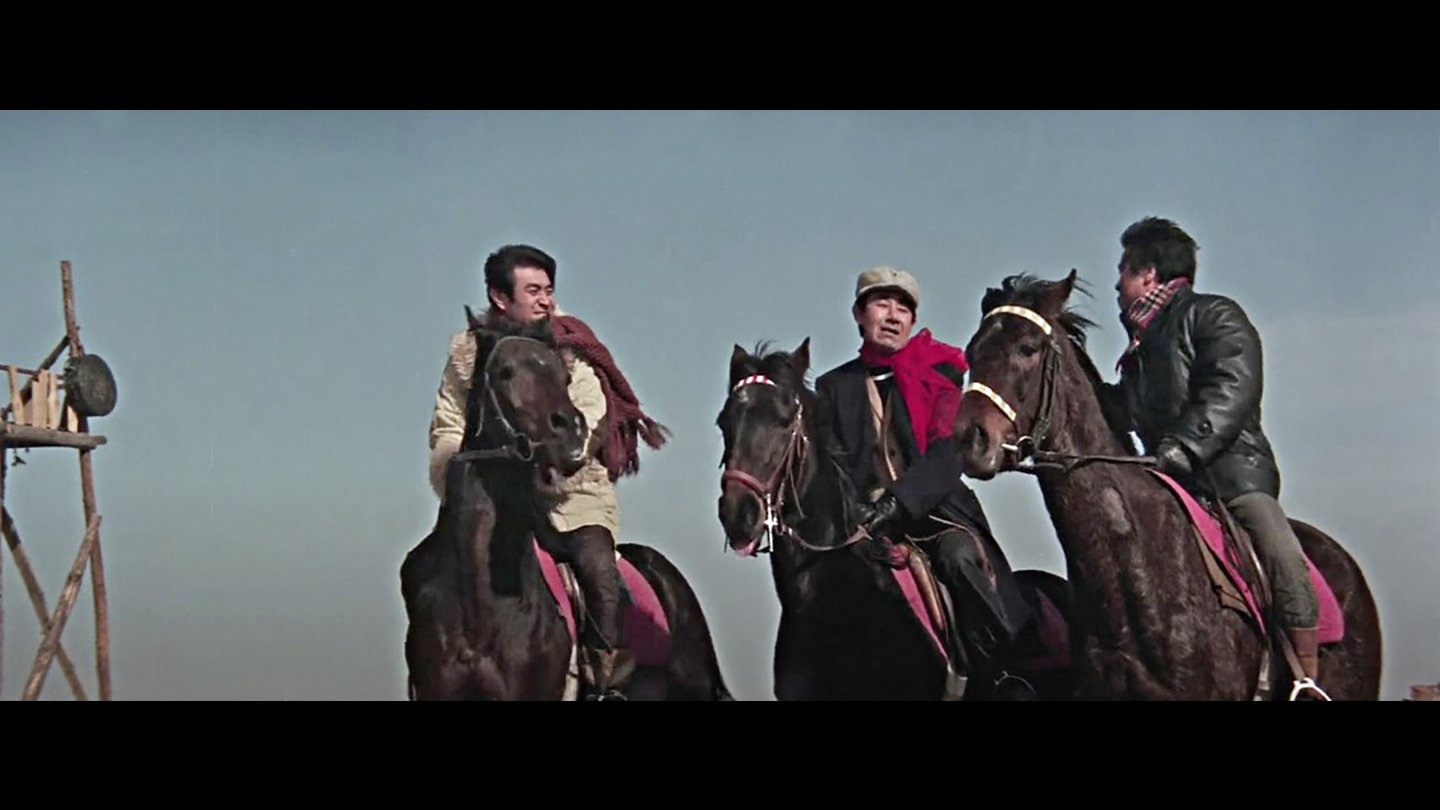

Diese turbulente koreanische Westernvariante, in der Weite der zeitweise von Japan besetzten Mandschurei angesiedelt, bietet alles, was dem Genre gebührt – von staubigen Ebenen bis zum obliga-torischen „Saloon“ inklusive Damengesellschaft, und ist dazu im Kern hochpatriotisch. Ironisch typisierte Ganoven – ein Spion, ein Profigangster, ein kleiner Gauner – jagen mehr gegen – als miteinander einer Buddhafigur nach, in der die Namen von Aufständischen gegen die Besatzer verborgen sind. Zunächst von Gier und Eigennutz getrieben, werden sie auf ihrer wilden Expedition zur Heimatliebe geläutert und reiten, wie könnte es anders sein, am Ende der Sonne entgegen. (Barbara Kronsfoth)
In the 1930s, the Japanese puppet state of Manchukuo was a refuge for Korean anarchists and other independence fighters while also serving as a place to make a career in the Japanese Imperial Army. In the 1960s, Japan’s efforts to industrialise Manchukuo served as a blueprint for South Korea’s economic development. Korean cinema also saw potential in this lawless, now unreachable frontier landscape, turning it into the setting of what became known as the Manchurian Western. With its wealth of cultural transpositions, this new subgenre was particularly influenced by the Spaghetti Westerns. Lee Man-hee’s classic SOESASEUL-EUL KKEUNH-EOLA is clearly inspired by Sergio Leone’s IL BUONO, IL BRUTTO, IL CATTIVO (1966), not least in terms of its soundtrack. Three adventurers compete for a priceless Buddha statue and the love a woman, trying to outmanoeuvre Japanese military, Chinese gangs, and each other along the way. To add to the viewing pleasure, much the costume design seems inspired by the hippie fashion of the time. Lee Man-hee worked on the film somewhat reluctantly, unable to fully escape the demands of a nationalist agenda. (Gerwin Tamsma)
Lee Man-hee: KALEIDOSCOPE (1961), CALL 112, MARINES ARE GONE (1963), BLACK HAIR (1964), THE DEVIL’S STAIRWAY (1964), THE SEVEN FEMALE POW’S (1964), FULL AUTUMN (1966), A WATER MILL (1966), WHISTLE (1967), ASSASSIN (1969), THE ROAD TO SAMPO (1975)
- Jang Dong-hwi
- Namkung Won
- Choi Nam-hyeon
- Kim Won-tae
- Jeong Kwang-seok