This is just a brief preview of a program, the curating of which we’ve been working on for a whole year. However, it already includes numerous significant works that have been presented in recent months at international film festivals for the first time or are going to be presented at the autumn festivals in the coming weeks.
This year, we’re particularly pleased to welcome Christian Petzold as our new president. And we’re delighted that MIROIRS NO. 3,, his most recent film, which premiered at the Cannes Film Festival, will celebrate its Austrian premiere at the Viennale.
This year's retrospective, organized as always in collaboration with the Filmmuseum, is a dream come true for all cinema lovers. For as undisputed as the status of Jean Epstein (1897-1953) as a key cinematic figure is, the opportunities to see his films are extremely rare. So let’s celebrate the history of cinema and the spirit of the avant-garde – with film copies and live music
In collaboration with the Filmarchiv, we're paying tribute to Angela Summereder (*1958), an author of international renown who has made a significant contribution to the history of Austrian cinema. This gives us the opportunity to present her extraordinary most recent work, B WIE BARTLEBY (B for Bartleby), as well as look back on her film oeuvre to date – right through to her debut film ZECHMEISTER (1981), which has recently been restored.
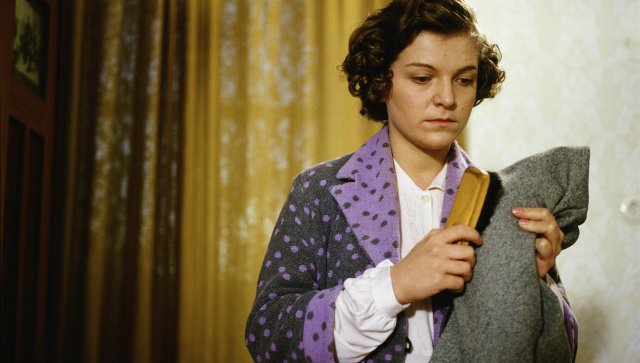
Traditionally, the historical programs of the Viennale give some insight into the work of important but lesser-known international filmmakers. We’ll now be presenting a few of them and invite you to explore neighboring, nearby, or somewhat more distant film worlds. They offer impressions of other times and/or other cultures while always allowing for multiple references to our present.

János Xantus (1953-2012) may be a cult director of Hungarian avant-garde cinema, but for many of our festival attendees he will probably be a new discovery. The Viennale will show a selection of works chosen by two young curators from Budapest that are characteristic of Xantus’s filmmaking. Against the backdrop of the dissolution of the Eastern Bloc, they paint a portrait of a time and a generation in transition.

Digna Sinke (*1949) has had a very long career as a film director. And she is still very productive today; at the beginning of this year, she presented her most recent work, HEMELSLEUTEL (Key to Heaven) at the International Film Festival Rotterdam. Sinke represents proof of the vitality of independent filmmaking in the Netherlands – not least in her support of her colleagues from the younger generation in realizing their cinematic projects as a producer.
Sinke’s own films combine explorations of the Dutch landscape with reflections on the dimension and meaning of being human. We’re presenting a selection in ten programs, which both attests to the consistent political impact of her work as well as demonstrates their cinematic richness of form and expression.

Finally, the artist duo Massimo D’Anolfi and Martina Parenti has been exploring the possibilities of human expressiveness for two decades using different approaches and within various themes. In traditions and customs, in art, crafts, and in architecture as well as in their extraordinary most recent film, BESTIARI, ERBARI, LAPIDARI (Bestiaries, Herbaria, Lapidaries) – in the central elements of nature.
The complete program for the Viennale will be published on October 7!