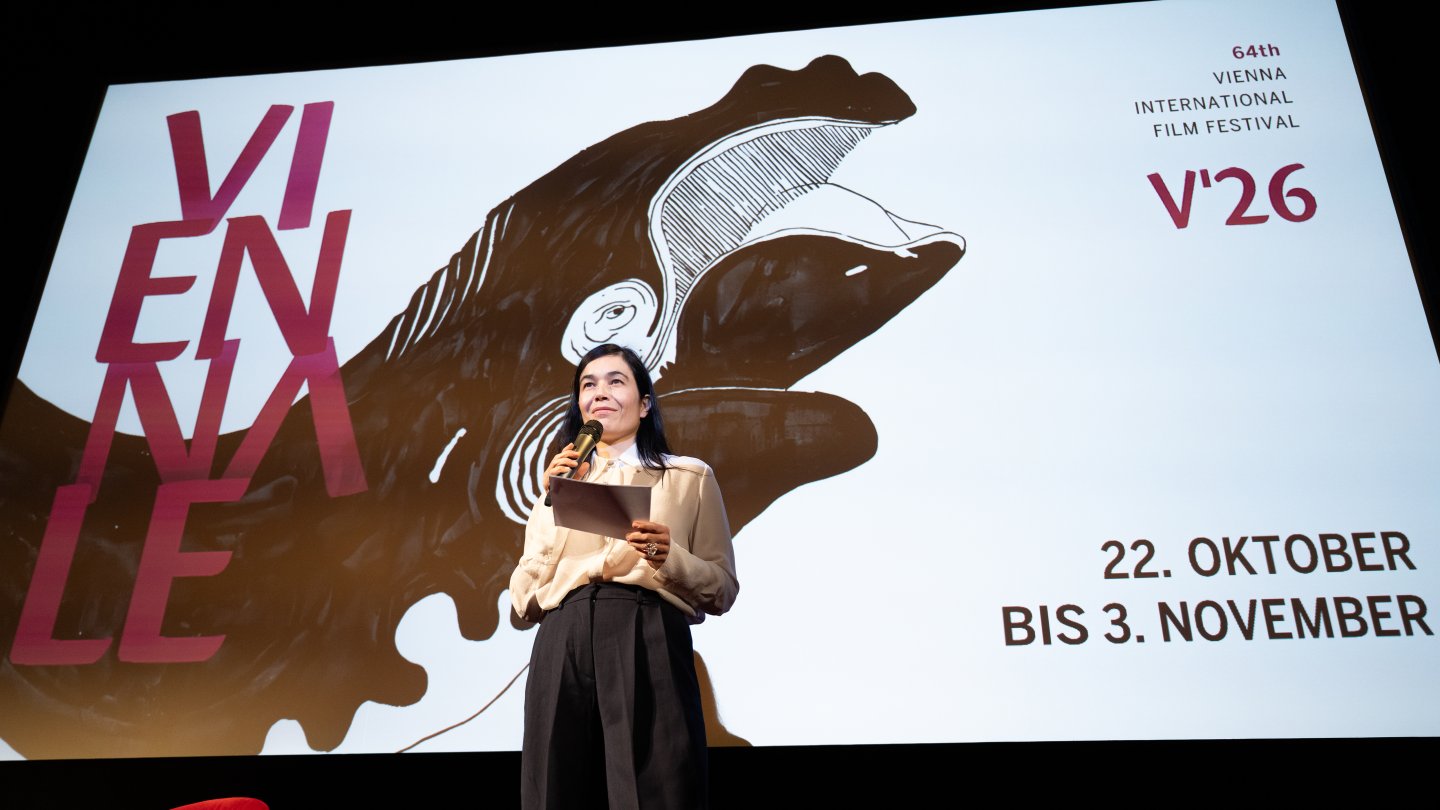
I’d like to start with a playful little exercise in presenting – or, rather, revealing – the program for this 64th edition of the Viennale. On the one hand, in a sense, I’ll break it down into its in individual parts: I’m going to list and count the elements and components that make up the festival experience. On the other, I’d like to describe the structures that support and organize it. It’s an experimental approach, which partly seeks to answer the question that we ask ourselves time and again: What is the purpose of a festival? So I’ll start with the description and calculating before I get to the content and its significance. But we’ll get to that later.
Let’s start. Thirteen days of the festival, plus four days of events that precede or extend the main program; in addition, the Retrospective runs until November 30. Thirteen days full of film screenings and meetings around contemporary as well as historic cinema. As our main venues, we have five cinemas with six theaters, which – respectively – can screen films in digital (DCP), Super 8, 16 mm, 35 mm and 70 mm, in 5.1, 7.1, and Dolby Atmos sound formats. Furthermore, there are three showings in 3D.

With its 740 seats, the Gartenbaukino screens the especially anticipated “big-name” films and a selection of outstanding auteur cinema. The Stadtkino, which seats 283, along with the Gartenbaukino, is an important venue for the premieres of Austrian films, and it also offers a carefully curated, late-night lineup for night-owl cinephiles. The Urania, seating 270, opens the daily showings with the 11 o’ clock program. The Filmmuseum, with 165 seats, also hosts the festival. First and foremost, it’s the traditional venue for the joint Retrospective, but the Viennale is also featured there with our main program, in particular with the premiere screenings of the current short film programs. The Metro Kinokulturhaus has two auditoriums – the Historic Hall with 155 seats and the Kinosalon with 88 – in which we combine historical programs with contemporary cinema in a variety of ways. This, particularly, is where we show the program curated by the Filmarchiv Austria as well as numerous restored films. Furthermore, it’s the ideal location to screen our longest films.
Several auditoriums regularly show four, others five, screenings per day. The exceptions are particularly long films and special screenings that fall outside the norm; these are shown at the Gartenbaukino – the two breakfast films at 6:30 in the morning, the Young Audience Screening for an audience aged eight years and above, the Erste Bank matinee, made possible by our main sponsor, as well as another matinee on Saturday, October 31. Beyond that, there are three closed screenings for high school students from Vienna and the surrounding area.
In total, there are 330 publicly accessible movie screenings. These are comprised of the 260 films announced in the program, plus a surprise film – which makes 261. The shortest is three minutes long, the longest seven hours and ten minutes. Played one after the other, this would amount to 261 films of 13 days and eight hours’ screening time. If you wanted to watch all of them, it would take longer than the festival itself takes. And if we count all the screenings, including all the repeat showings, we come to more than 581 hours of cinema on the screen.
In addition, there are the events at the Viennale Zentrale, which this year is located in the beautiful Funkhaus: two discussions with filmmakers and two roundtables, which are aimed at both industry professionals and film enthusiasts alike. And there’s music, of course: five evenings and an Early Dance Floor on Sunday afternoon. Fifteen names in the lineup – DJs, live acts, and collectives – an open jam and a rap cypher covering around 20 different genres, from jazz to dub, amapiano and Northern soul to disco. Our long-time friend Lars Eidinger will also be at the decks. During the festival, two new books will also be presented, and a lecture given in memory of Abbas Kiarostami will take place at the Metro Kinokulturhaus. In the film auditoriums, there will be countless presentations and Q&As with the 139 guests attending this year’s Viennale.
Most of our program is dedicated to contemporary cinema – which features productions from a total of 71 countries, representing a considerable range of geographic diversity and created in various formats and under a wide variety of conditions. This has been, to a certain extent, the Viennale’s recipe since its conception: presenting a selection, made with the utmost care, of what is currently happening in auteur cinema. And this has always included short films. This year, there are 40, 38 of which are spread across ten programs; one in conjunction with a feature film, another opening the festival. The attention we devote to this format underlines the importance we attach to it – both in our contemporary programming and in our historical programs; here, for example, in the monographs dedicated to Phil Solomon and Vasko Pregelj.
The rest of the program consists of cinematographies that explore an era, a discourse, a scene, or the work of a particular figure from a specific period in time – this year with the series “Everything Bright and Wonderful?”, documentary films by Jocelyne Saab, as well as early short films by Abbas Kiarostami. And the Historiography program, which presents a selection of extraordinary films restored this year. Once again, short films are featured here with the two fantastic programs from the Pelechian Project.
Only 33 percent of our films this year are by female directors – a figure that remains insufficient, even if the ratio is more balanced than with those of international festivals at which these films will have their premieres.
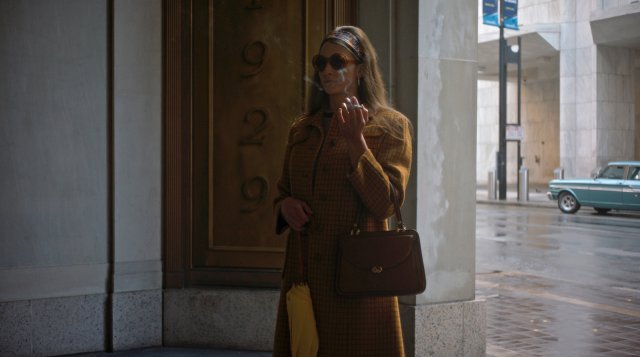
And there’s more: the trailer, which is a tradition. This year, it was shot by the American filmmaker Kelly Reichardt, who, in less than 120 seconds, manages to honor all the trades involved in the magical process of filmmaking.
This year, we have started several initiatives, of which I’d like to highlight two projects that are dedicated to a young audience. One is the Holiday Pass, which we already presented in summer; the other is the Viennale Debut Card. The latter is aimed at young people aged between 14 and 19. With it, they can attend screenings of 19 films at a special price. We made the selection in collaboration with the Vienna Board of Education; the project is sponsored by Erste Bank.
To continue with the numbers: We’re presenting the ninth edition of Textur, the Viennale‘s series of publications – and the festival, too, has been under the leadership of its current artistic director for nine years. This year’s edition of Textur is dedicated to Tizza Covi and Rainer Frimmel, the director duo of our closing film. In this way, we’re celebrating a big year of Austrian cinema – with two internationally acclaimed filmmakers, their nine films, and thirty years of collaborative work.
Eva Sangiorgi