Pra eu dormir tranquilo
To Sleep Quietly


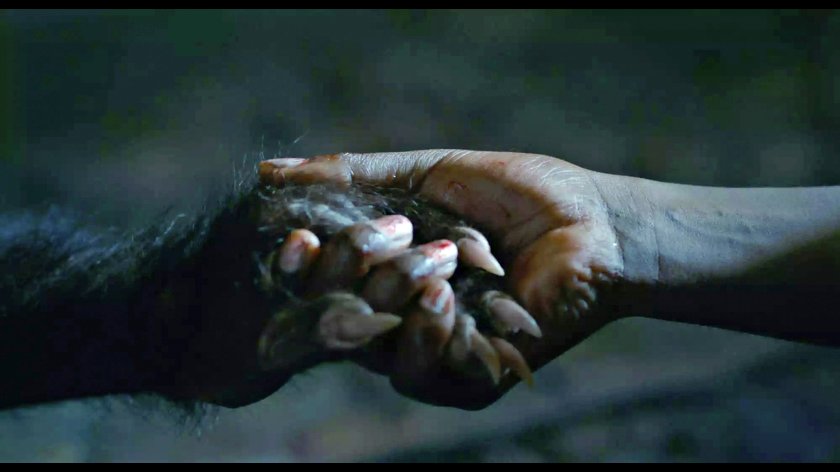
Stillen vor dem TV-Nachtprogramm, Kindstod, Depression und Fetischismus: Ihren Erstling O LENÇOL BRANCO hatte Rojas noch (mit dem Kommilitonen Marco Dutra zusammen) als Abschlussarbeit an der Escola de Comunicações e Artes der Uni São Paulo realisiert. Doch das zwischen verblasstem Küchenmobiliar und Couch auf Fuji-Analogfilm gedrehte Kammerspiel markierte mit gezielten visuellen und akustischen Irritationen gleich inszenatorische Souveränität – und brachte das Duo nach Cannes. Dort reüssierte zwei Jahre später bei der Semaine de la Critique auch UM RAMO, wo in der pop-bunten Wohnwelt einer jungen Familie zwischen Goldfisch und Kinderspielzeug ungezähmte Natur aus einem makellosen Frauenkörper wuchert. In PRA EU DORMIR TRANQUILO ist das Setting gediegener - das Unheimliche haust als untote Ex-Nanny im Schrank des Kinderzimmers, während vorne vergossener Rotwein den fein gedeckten Tisch befleckt.
Verwundungen überall: Und scheinbar echtes Blut auf den an einem Zaun aufgeriebenen Fingerspitzen des Angestellten, der in VESTIDA (Rojas’ erstem solo gedrehten Film dieser Auswahl) zu einer Beerdigung in sein ländliches Elternhaus zurückkehrt. Entzifern lassen sich die dort eingeritzten Buchstaben aus der Vergangenheit nicht. (Silvia Hallensleben)
In Anwesenheit von Juliana Rojas.
To exist implies to have a body. In the cinema of Juliana Rojas, the body is a domain of uncertainty. It is where desire is felt, a place from which new bodies can be birthed but also a space of painful mortality. In her films, the body can equally be afected by phenomena that belong to the realm of the fantastic. Human biology often seems unaware of the mechanics of the natural world.
In these four short films shot between 2004 and 2011, the family forms a ubiquitous, seemingly robust institution upon which each main character can emotionally rely. It is a nucleus of belonging on the one hand, although there is also a solitary dimension of existence that stands in opposition to it on the other. In other words, the family stands for what is supposedly normal, even as each character experiences something that could hardly be less usual.
In UM RAMO, a woman neither satisfied with the companionship of her husband nor the afection of her son starts to grow leaves and branches. The doctor’s bemusement at her condition pales in comparison to her own confusion at the vegetal mutation taking over her body. Becoming a plant isolates her from everything. LENÇOL BRANCO shows how a first-time mother must deal with the death of her newborn son: a death that has arrived far too early and speaks of a destiny as unpredictable as it is unavoidable, impossible to fully represent. The emotional solution she finds is far from orthodox, following the logic of fetishism and superstition as a shortcut for mourning. In VESTIDA, a young man returns home to the countryside to say goodbye to his mother who has just died. His father’s grief is infinite but discreet, in a film about observing, accompanying and remembering. PRA EU DORMIR TRANQUILO recounts how a boy begins to grieve after the death of his nanny. That his mother is awaiting the arrival of a baby girl is of no comfort to the boy, who thought he would always have the woman who cared for him by his side. But a powerful surprise will ease the pain of loss.
Not only can we recognise recurring obsessions in Rojas’ films (some of which were co-directed by Marco Dutra), but also her formal skill. She can extract multitudes from small spaces and use her framings to transform humble domestic environments into corridors in which light and shadow create endless mystery. There are beautiful scenes in the films, but perhaps none as touching as a central moment from VESTIDA: the son looks at his sorrowful father and cannot do anything to alleviate his sufering. The eloquence of the scene lies in the distance generated by the chosen depth of field, showing both the intimate state of the widower and the respect of his son. (Roger Koza)
In the presence of Juliana Rojas.
- David Navarro
- Maristela Chelala
- Sabrina Greve
- Juliana Rojas
- Fernanda Tanaka
- Juliana Rojas
- Marco Dutra