
All Bright and Wonderful?
At the beginning of the 1990s, anything seemed possible. The Cold War was over, the borders were opening to the East, Europe was growing closer together. Mobility, consumerism, and new technologies shaped everyday life, while what had once been familiar societal certainty became less and less secure. Austria found itself experiencing profound change – politically, culturally, and socially.
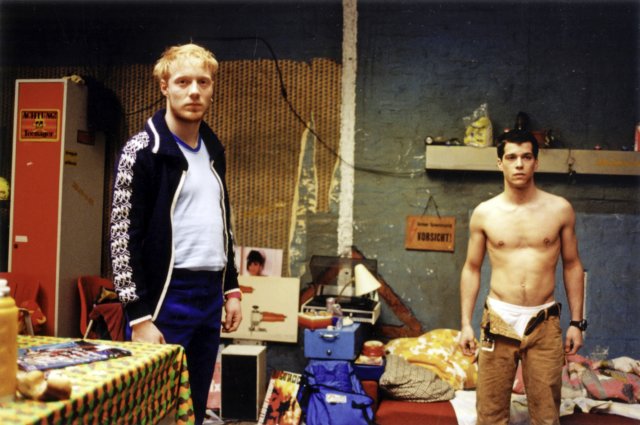
Domestic cinema, too, reacted sensitively to these changes, focusing on characters who navigated spaces between their origins and what lay ahead, between the provinces and the metropolis, dealing with different languages, cultures, and life choices, because it had lost its orientation. The traditional imagery of Austria gave way to narratives about in-between places and marginalization. Train stations, shopping centers, night clubs became settings of a society that was restructuring itself and characterized by hitherto unknown influences from other cultures. While the country opened up to the outside, debates about identity and belonging intensified.
At the same time, a new generation of filmmakers took the spotlight; their work was less interested in grand national narratives than in the everyday life of its protagonists, urban spaces, and the influences of pop culture. Documentary immediacy meets stylized imagery; personal stories meet social and societal upheaval.
The five selected works in the program are situated within these contradictions of euphoria and uncertainty, inviting us to view the 1990s not as a closed chapter of the past but as lived experience that reaches into our present to be (re)discovered.
A FILMARCHIV AUSTRIA PROGRAM.