Goryeojang


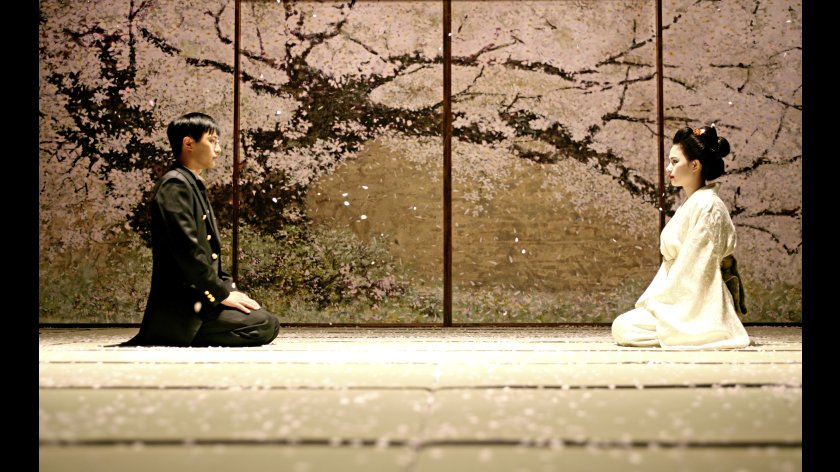
Although both Keisuke Kinoshita and Shohei Imamura’s famous versions of NARAYAMA-BUSHI KŌ are unflinching in their brutality, Kim Ki-young offers an even bleaker and more shocking take on the ancient custom of abandoning the elderly in the mountains once they reach the age of seventy: ‘goryeojang’. Before moving to the setting of the kingdom of Goryeo that gave Korea its western name, Kim stages a darkly humorous debate which has experts discussing 20th century population growth. The story itself is about the life of a nobleman called Guryong whose widowed mother remarries a man with ten sons. After the village shaman foretells that Guryong will bring about the death of these sons, they try to poison him but fail, leaving him crippled for life instead. As a grown-up, he will have to face the unrelenting brothers time and again. Despite being the only film in the programme not set in colonial times, GORYEOJANG shows both the ongoing intertwining of Japanese and Korean culture as well as functioning as an allegorical takedown of both postwar Korea and the colonial era that preceded it. The images that make up the third and sixth reels (of ten) are lost and the gorgeously restored print only plays sound with subtitles during these intervals. (Gerwin Tamsma)
Kim Ki-young: BOX OF DEATH (1955), YANGSAN PROVINCE (1955), TOUCH-ME-NOT (1956), A WOMAN‘S WAR (1957, TWILIGHT TRAIN (1957), FIRST SNOW (1958), DEFIANCE OF A TEENAGER (1958), SAD PASTORALE (1960), THE HOUSEMAID (1960), THE SEA KNOWS (1961), GORYEOJANG (1963), ASPHALT (1964), A SOLDIER SPEAKS AFTER DEATH (1966), WOMAN (1968), LADY HONG (1969), ELEGY OF REN (1969), WOMAN OF FIRE (1971), INSECT WOMAN (1972), TRANSGRESSION (1974), PROMISE OF THE FLESH (1975), LOVE OF BLOOD RELATIONS (1976), IODO (1977), PEASANTS (1978), KILLER BUTTERFLY (1978), WATER LADY (1980), NEUMI (1980), HUNTING OF FOOLS (1984, BEASTS OF PREY (1985), BE A WICKED WOMAN (1995)
- Kim Jin-kyu
- Ju Jeung-ryu
- Kim Boae
- Kim Dong-won
- Park Am
- Kim Ki-young
- Kim Deok-jin
- Kim Ki-young
- Han Sang-ki