
The Viennale is pleased to already announce the opening as well as the closing film of this year's festival.
The festival will open on Thursday, October 17 with the French film C'EST PAS MOI (IT'S NOT ME) by Leos Carax.

C'EST PAS MOI is an unconventional, essayistic and very personal film by Leos Carax that combines autobiography, film history and contemporary history in just 42 minutes. The director reflects on his medium, his role models such as Vertov, Chaplin and Godard, and creates a lively mix of cinematic influences. A multi-layered reflection on love, beauty and cinema.
“I chose C'EST PAS MOI by Leos Carax as the opening film because it fits wonderfully into the cinematographic universe that I would like to see represented in the Viennale program,” says Viennale Director Eva Sangiorgi. “In fact, it is a film that pays tribute to the tradition of auteur cinema and pays homage to Jean-Luc Godard in particular. In this way, it is linked to a deeply political, exploratory cinema that chooses the form of filmmaking itself as the object of reflection. At the same time, C'EST PAS MOI is a cinematic self-confession that, through the work of a great auteur like Carax, combines personal memories with communal ones to create a historical consciousness. It is a film that formulates an ethic of its craft, which I would also like to declare my manifesto for this edition of the festival. And I am sure that the Viennale audience will appreciate the irony of this extraordinarily intelligent play with images.”
DAHOMEY by Mati Diop (France, Senegal, Benin 2024) will be screened as part of the festival's traditional closing gala on October 29.
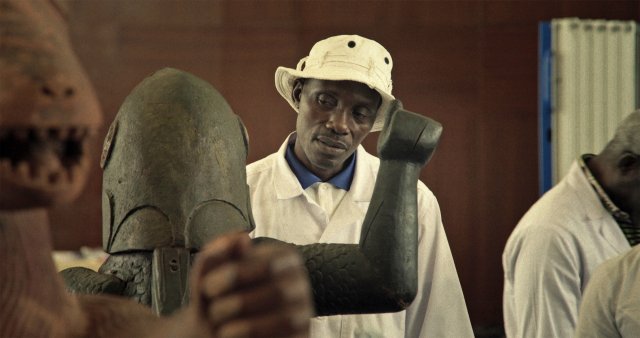
The film DAHOMEY by Mati Diop focuses on the return of 26 treasures looted during the colonial era to the present-day state of Benin and gives the objects and the young African generation a voice. At the center of the film is a discussion by students of the Université d'Abomey-Calavi that reflects on the historical context.
“DAHOMEY is a valuable film that makes an important contribution to removing the remnants of the post-colonial legacy,” says Eva Sangiorgi. “It gives space to the polyphony of thoughts and reflections of younger generations and honors their clarity and energy. Mati Diop has shown courage in embarking on this journey. And it is gratifying and satisfying that she was awarded the Golden Bear at the Berlinale. I would like to conclude the Viennale with this film, because it brings together many of the considerations that are being instigated by this year's program. We continue to reflect on power relations and economic exploitation along the borders and margins: problems that we must confront in our time.”