
LE JOURNAL D'UNE FEMME DE CHAMBRE
The Diary of a Chambermaid
Tagebuch einer Kammerzofe
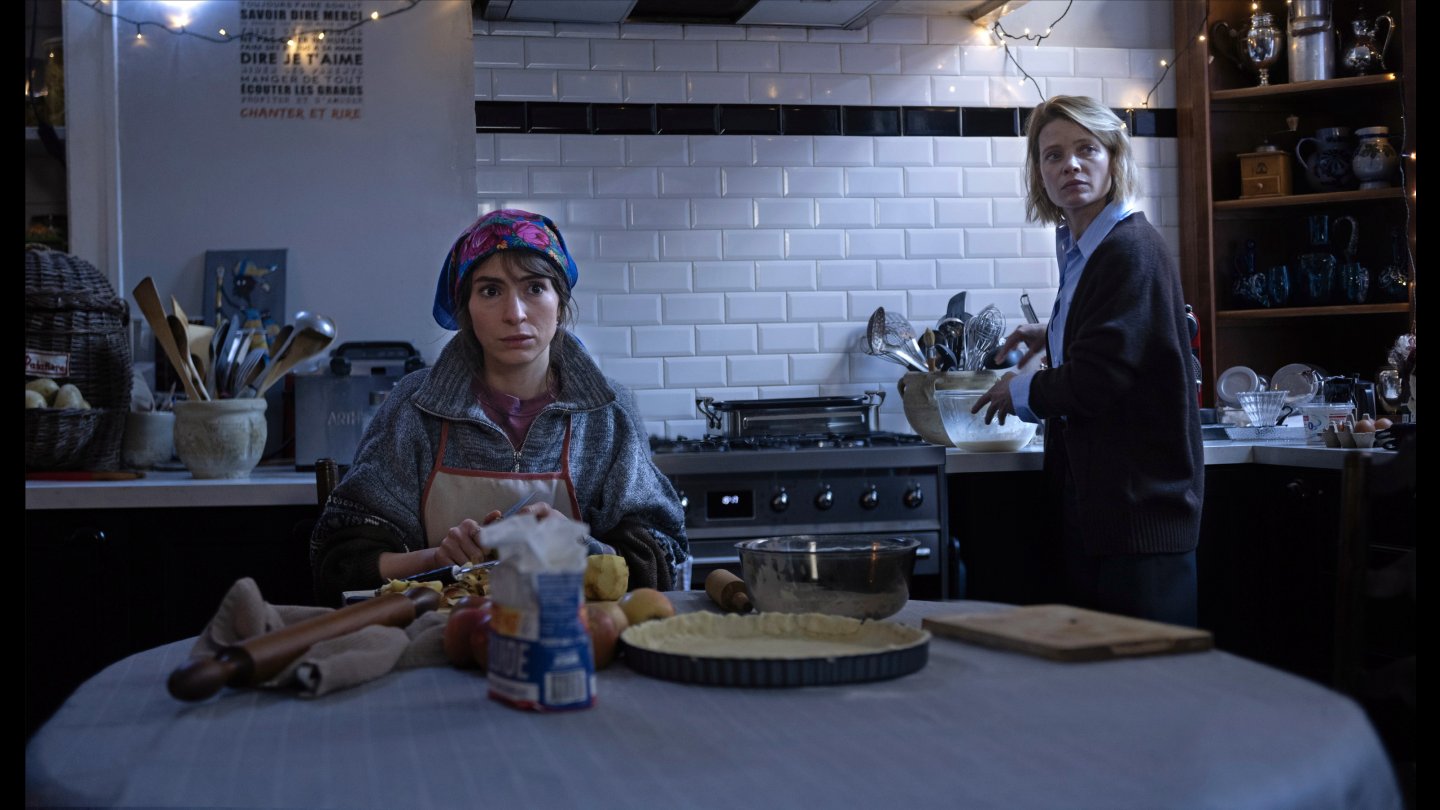
This may not be the first screen adaptation of Octave Mirbeau’s titular novel, but in the hands of Romania’s most uncompromising filmmaker, its critical spirit is renewed by being transposed to the present. The diary in question is now audiovisual and is the medium which Gianina chooses to keep in touch with her young daughter, who lives with her grandmother in a Romanian village. Gianina’s everyday life as a domestic servant in the home of a progressive French middle-class family provides the starting point for an inquiry into class self-deception while also examining the working conditions that restrict the freedom of domestic workers. Everything surrounding her desire to spend Christmas with her family becomes a remarkable illustration of servitude. Jude is critical, but fortunately he is far too lucid to be cynical. Without ever passing judgement on his characters, he is able to unsettle the viewer because he lays bare the limits of the well-meaning in recognisable situations that are at once amusing and shamefully revealing. His meticulous attention to detail—monuments, small objects, the characters’ vocabulary, cultural references—constructs a symbolic mosaic in which individual actions and personal dilemmas evoke the malaise of the present. (Roger Koza)