|
|
|
|
|
|
|
|
60th VIENNA INTERNATIONAL FILM FESTIVAL V’22
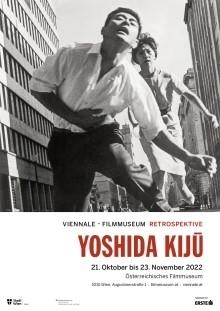
RETROSPECTIVE: YOSHIDA KIJŪ
Viennale and Filmmuseum present twelve rarely shown works of the Japanese master on 35mm
September 16, 2022
The Viennale is particularly pleased to be able to dedicate this year's retrospective, organized together with the Austrian Film Museum, to the great Japanese director Yoshida Kijū.
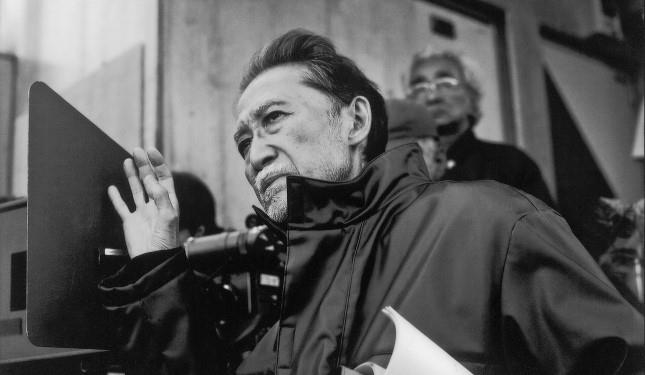
Yoshida Kijū (also known as Yoshida Yoshishige) was born in Fukui, Japan, in 1933. After the end of the war, his family moved to Tokyo, where he studied Romance languages and literature and was supposed to become a diplomat. But Yoshida was more interested in cinema. In 1955, he was accepted at Shōchiku studio, where he met Ōshima Nagisa, with whom he founded a film magazine. Through it, the young man attracted the attention of Kinoshita Keisuke, who made him his assistant director.
|
|
|
|
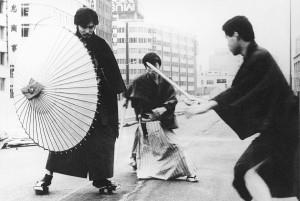
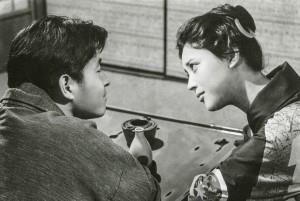
In 1960, Yoshida made his directorial debut with ROKUDENASHI (GOOD FOR NOTHING), a riotous film about disoriented youth. In the powerful melodrama AKITSU ONSEN (AKITSU SPRINGS, 1962), he collaborated for the first time with Mariko Okada, who would become his wife and the protagonist of his films that critically examine Japanese gender relations. With Okada, he also founded the independent production company Gendai Eigasha in 1966. Three years later, he presented EROSU PURASU GYAKUSATSU (EROS + MASSACRE) – which together with RENGOKU EROICA (HEROIC PURGATORY) and KAIGENREI (COUP D’ETAT) forms the trilogy of Japanese radicalism – one of the central works of Japanese New Wave. Although Yoshida himself never particularly liked this term, he is regarded as its most important representative, along with Ōshima and Masahiro Shinoda.
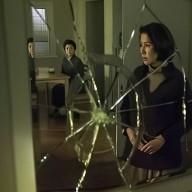
Stylistically daring and always touching on taboos in terms of content, Yoshida’s works critically reveal the upheavals in Japanese society, especially in the 1960s. From the mid-1970s onwards, Yoshida directed only a few films. In 1998, he published the book Ozu Yasujirō no han eiga (Ozu’s Anti-Cinema), a widely acclaimed analysis of the work of the great Japanese director. In 2002, Yoshida made KAGAMI NO ONNA-TACHI (WOMEN IN THE MIRROR), his last film to date.
|
|
|
|
"The Viennale/Filmmuseum retrospective on the occasion of the festival’s 60th anniversary is a deeply significant gesture. I had wanted to celebrate the work of Yoshida Kijū for a long time, but the conditions were not in place. In fact, realizing this cycle required special efforts and synergies. The works of the Japanese master have circulated on rare occasions only, and we will be able to see them screened in Vienna in the splendor of 35mm prints. It is therefore a truly special event and propitiated by Yoshida himself, who personally oversaw the selection of the works.
Looking deeper, it is a retrospective that evokes the aesthetic and political reflections of arthouse cinema in the second half of the 20th century through different cinematic expressions in dialogue with the great authors of the period. This is cinema characterized by a subversive spirit and poetic depth. Our retrospective pays homage to an auteur who is continuously searching, and in the various stages of his career surprises us again and again."
Eva Sangiorgi, Viennale Director
|
|
|
|
"I am delighted that after four adventurous years of joint thematic retrospectives we are returning to a monographic format with a retrospective dedicated to the subversive genius of Yoshida Kijū. Everybody in Vienna with more than just a passing interest in the history of cinema knows that presentations of Japanese cinema are rare occurrences, for mostly pragmatic reasons, which makes our celebration of Yoshida Kijū all the more precious.
Yoshida erupted on film stage in 1960 as one of the more unruly, angry faces of the Japanese New Wave , only to gradually evolve into an even more radical cinematic stylist and thinker – imagine a visual talent of Antonioni, combined with a political intelligence of Pasolini! Finally, we are especially honored that Yoshida-san – while unable to attend the retrospective due to his age – has personally curated his Filmmuseum/Viennale retrospective, hand-picking the 12 films especially dear to his heart, paying a loving tribute to his wife, his regular actress Okada Mariko, in the process."
Michael Loebenstein, Director of the Austrian Film Museum
|
|
|
|
|
|
This year’s Viennale offers a wonderful opportunity to get to know Yoshida’s work, which is unfortunately rarely shown in the West. Not to be missed!
Yoshida Kijū
October 21 to November 23, 2022
A Program of Viennale and Austrian Film Museum
If you have any questions, please do not hesitate to contact us!
Your Viennale Press Team
Tel. +43 (0)1 526 59 47
Fredi Themel ext 30
Sarah Oos ext 38
E-Mail: press@viennale.at
Sandrino Weghofer ext 20 (accreditations)
E-mail: akkreditierung@viennale.at
www.viennale.at
Photo copyrights: The Japan Foundation © Gendai Eigasha; Viennale; Shōchiku.
|
|
|
|
|
|
|
|
|
|
VIENNALE – Siebensterngasse 2, 1070 Wien, Austria
www.viennale.at – office@viennale.at
We sent out this message to all press release-subscribers.
If you no longer wish to receive these emails, simply send an email with "unsubscribe" to press@viennale.at
© 2022 Viennale. All rights reserved.
|
|
|